If your drains clog repeatedly within weeks of cleaning, the problem isn't your plunger technique — it's something deeper that needs a different approach.
Key takeaways
- Recurring clogs usually mean buildup deep in the line, not just at the drain opening.
- Tree roots from mature Redlands landscaping are a leading cause of slow or blocked sewer lines.
- Hard water deposits inside pipes narrow the channel and catch grease and soap faster.
- A plunger clears the symptom; a camera inspection finds the actual cause.
Surface Clogs vs. Systemic Problems
A single slow drain that clears with a plunger and stays clear is a surface clog — hair, soap residue, or debris caught at or near the drain opening. Those are common and usually manageable with regular cleaning. The pattern that signals a deeper problem is recurring clogs: you clear the drain, it flows fine for two or three weeks, then it slows again. Or multiple drains in the house slow simultaneously.
When clogs keep coming back despite regular cleaning, or when several drains are slow at once, you're likely dealing with a problem further down the line — in the branch drains, the main stack, or the sewer line itself. Addressing only the symptom (the slow drain at the fixture) without investigating the cause leads to exactly the pattern most frustrated Redlands homeowners describe: endless temporary fixes that never actually solve the problem.
Hard Water and Soap Scum
In Redlands and the Inland Empire, the mineral-rich water reacts with bar soap and body wash to form a thick, waxy residue called soap scum. Unlike the soap scum you can wipe off tile, the version that forms inside drain pipes is semi-solid and sticky. It coats pipe walls progressively, reducing the effective diameter of the drain and providing a surface that catches hair and other debris far more aggressively than a clean pipe.
This is one reason Redlands homeowners often experience drain problems faster than friends in lower-mineral-content areas. Liquid dish soap and body wash lather differently in hard water, and the surfactants interact with calcium and magnesium to leave behind residue that accumulates in traps and horizontal drain runs. Switching to liquid soap over bar soap and flushing drains monthly with hot water (not boiling — hot tap water) helps slow this accumulation, but it doesn't eliminate it.
Grease Buildup in Kitchen Drains
Cooking grease is the leading cause of kitchen drain problems. Fats and oils that go down the sink are liquid when warm but solidify as they cool in the pipe. Over months and years, a grease layer builds up inside kitchen drain lines — typically in the horizontal runs between the sink and the main stack. This layer is tacky, attracts food particles, and progressively narrows the pipe.
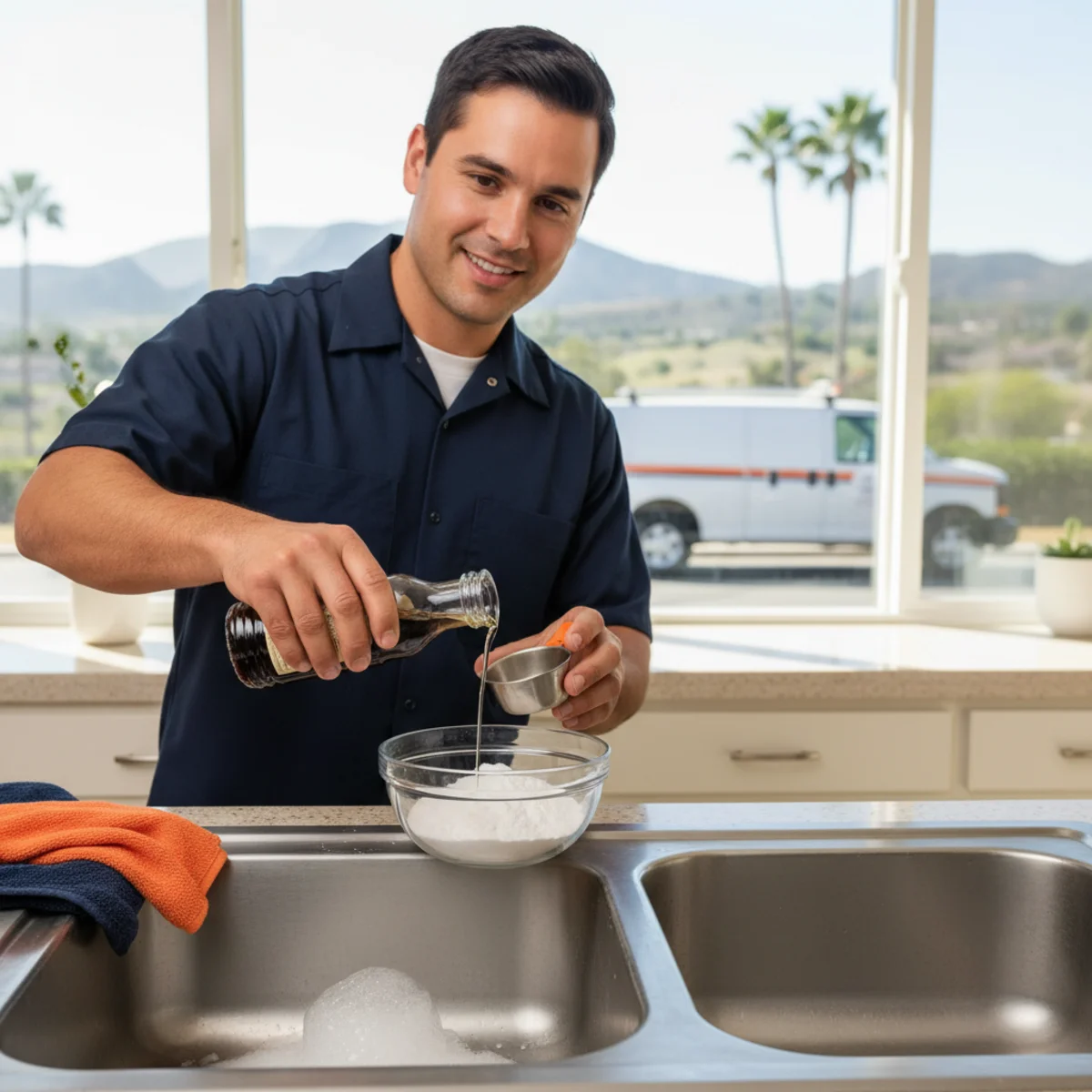
The common advice to "flush with hot water after pouring grease" is better than nothing but not a solution. Hot water carries grease further down the line before it cools — which means it deposits further away and is harder to reach. The better practice is to collect grease in a container and dispose of it in the trash. Baking soda followed by boiling water monthly can help keep the upper portion of the drain clear, but for an established grease accumulation, mechanical cleaning or hydro jetting is the only real fix.
Root Intrusion in Sewer Lines
In established Redlands neighborhoods — particularly areas with mature citrus trees, eucalyptus, and ornamental trees — root intrusion into sewer lines is a recurring problem. Roots enter through small cracks or deteriorated joints in clay or cast-iron sewer lines, then grow inside the pipe, catching toilet paper and debris until the line is partially or fully blocked.
The characteristic pattern of root intrusion is that the whole house drains slowly — not just one fixture, but toilets, showers, and the laundry drain all back up or are sluggish. You may hear gurgling from the toilet when the washing machine drains. These multi-drain symptoms point to a problem in the shared sewer line rather than an individual drain.
Root intrusion can be cleared with hydro jetting, and the camera inspection that should follow will show you whether the line is intact (and how quickly roots are likely to return) or whether it's cracked and in need of repair.
Pipe Scale and Narrowed Drains
Long-term exposure to hard water leaves mineral deposits on pipe interiors. In supply lines this is well known, but drain lines are also affected — particularly where standing water sits (in traps) and in areas where drain water cools slowly. Cast-iron drain pipes from the 1950s and 1960s are especially prone to internal scaling on their rough interior surfaces.
In severe cases, a 4-inch sewer line can narrow to a 2-inch effective opening from decades of scale accumulation. No amount of drain cleaner or manual snaking will remove calcified mineral scale — hydro jetting with sufficient pressure is the appropriate tool, and in extreme cases, relining or replacing the affected section is the lasting solution.
Limits of DIY Drain Cleaning
A plunger is effective for simple clogs at or near the drain opening. A hand snake can reach several feet down the drain and clear hair and soft debris. Both are legitimate first steps for an isolated slow drain.
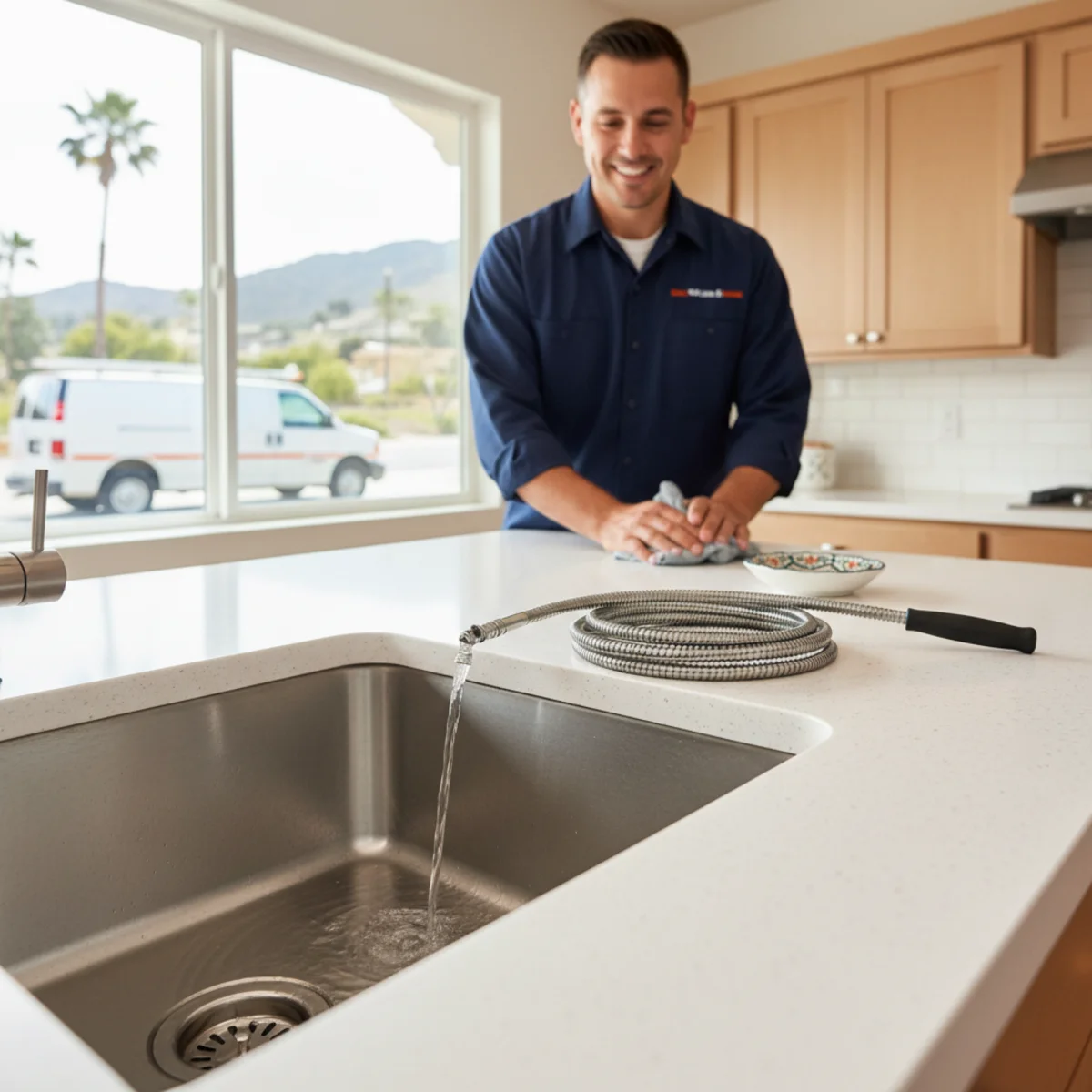
The limits: a hand snake can't reach far enough to address clogs in branch lines or the main stack, and it can't remove grease, soap scum, mineral scale, or roots — it can only punch a hole through them, creating temporary flow that closes up again quickly. Chemical drain cleaners dissolve organic matter (hair, soap) but don't remove grease effectively and can damage certain pipe materials over time. They're a short-term measure at best.
If you've snaked a drain or used drain cleaner and the problem returns within a few weeks, it's time for a professional assessment.
Professional Solutions
We approach recurring drain problems diagnostically rather than throwing the same tool at the same symptom repeatedly. For isolated clogs, professional mechanical snaking with larger equipment reaches further and clears more completely than consumer tools. For grease, soap scum, and scale, hydro jetting — which uses water at high pressure to scour the pipe walls rather than just punch through a clog — produces a genuinely clean pipe rather than a temporary opening.
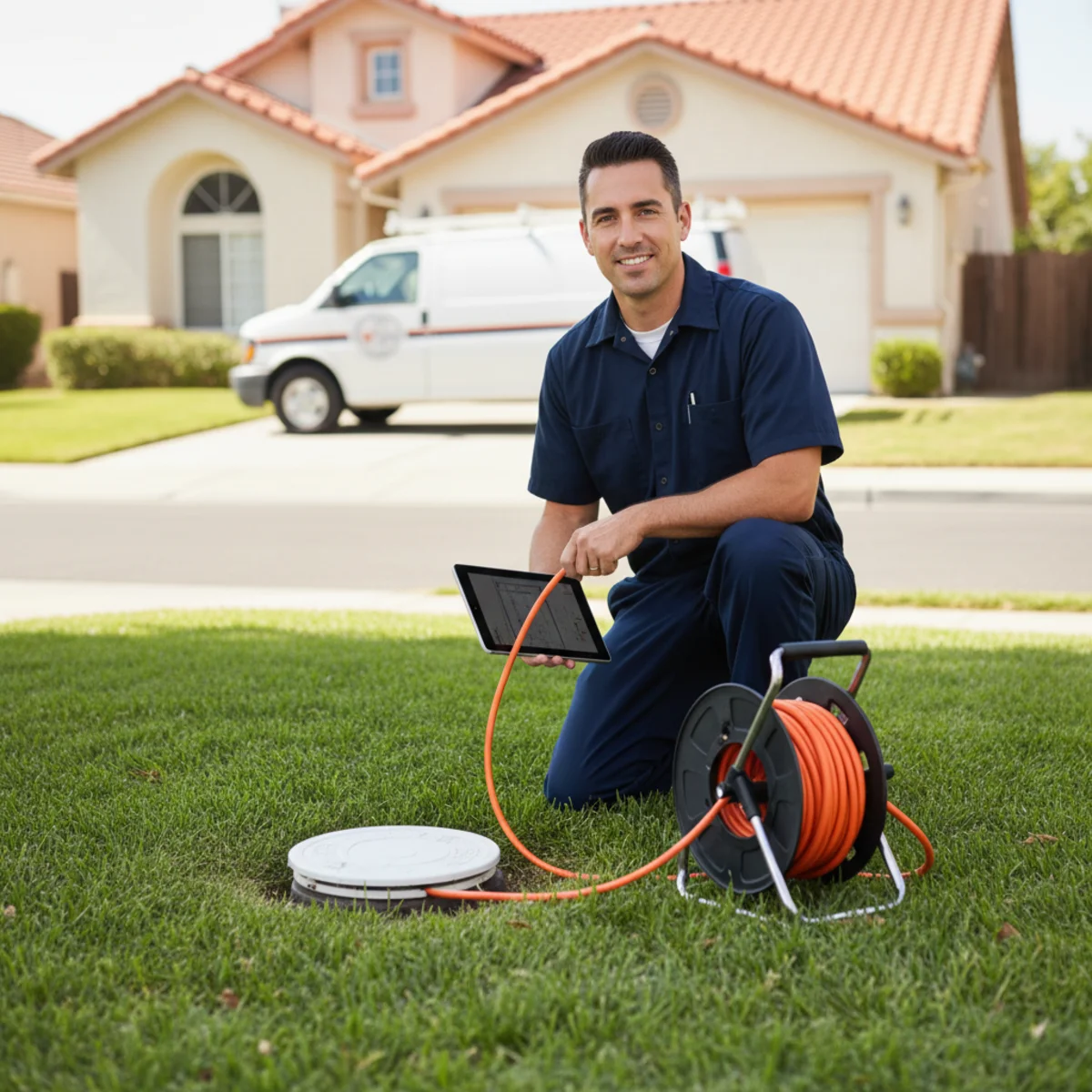
For recurring problems involving the main sewer line, a sewer camera inspection shows us exactly what we're dealing with: root intrusion, scale, offset joints, or structural damage. From there, we can recommend the right repair rather than repeating cleanings that don't address the cause. Call (207) 419-2600 to schedule drain cleaning or a sewer camera inspection — we serve all of Redlands and the surrounding Inland Empire.
Need drain cleaning in the Redlands area?
Professional drain cleaning for slow or blocked drains throughout your Redlands Heights home. Upfront pricing and fast local service.
Written & reviewed by the Redlands Heights Plumbing Pros team
Our licensed (CA C-36), local plumbers have handled the realities of Redlands-area homes for years — hard water, aging pipe, and slab leaks included. Questions about your home? Call (207) 419-2600 or request service.
Verify our CSLB license