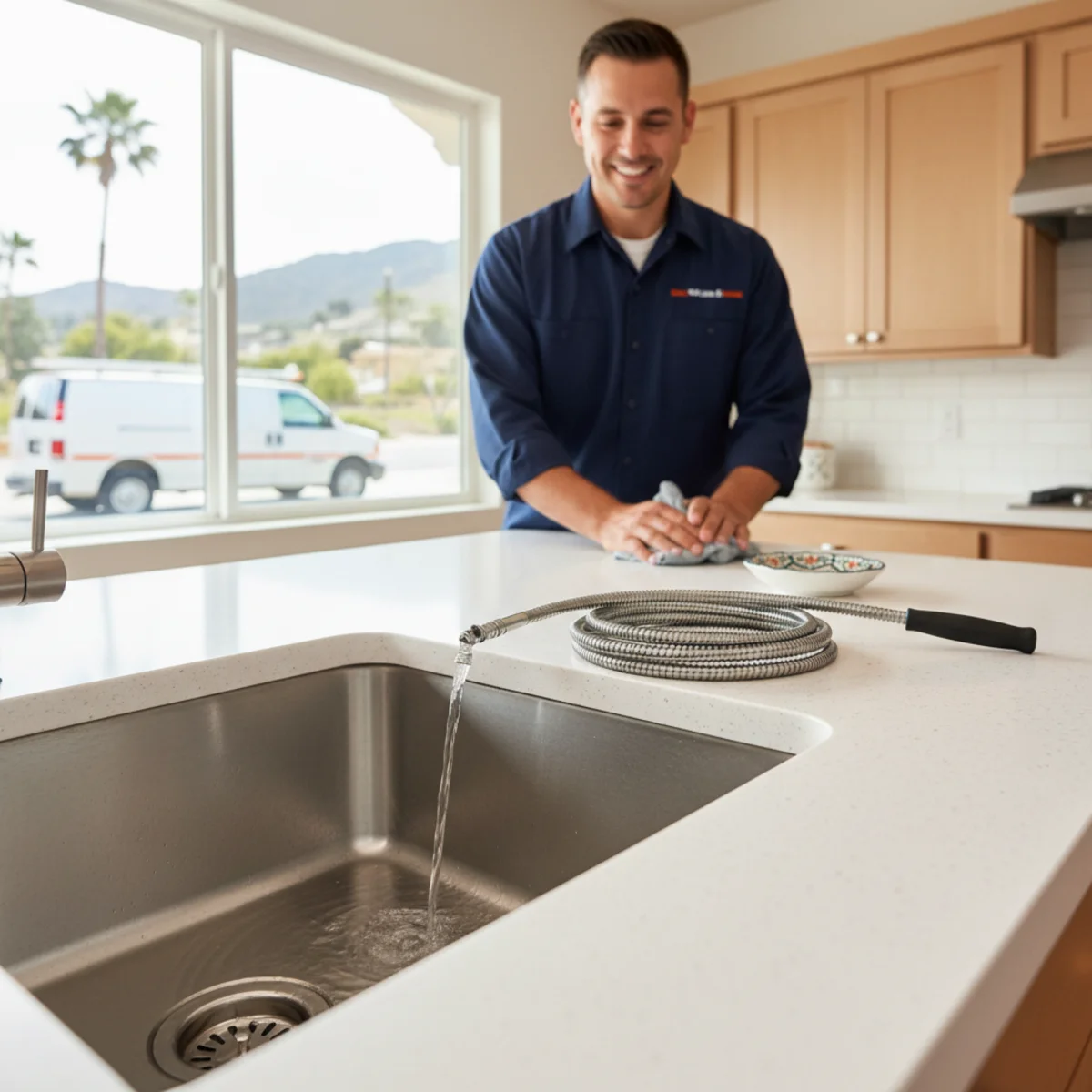
A sewer camera inspection takes the guesswork out of sewer line diagnosis — here's how the process works and what it can find that no other method can.
Key takeaways
- A camera inspection sends a waterproof lens through the line to show exactly what is wrong.
- It removes guesswork, so plumbers only dig or replace what is actually damaged.
- Schedule one when buying an older Redlands home - hidden sewer problems are expensive surprises.
- Most inspections take under an hour and produce a video record you can keep.
How Sewer Camera Inspection Works
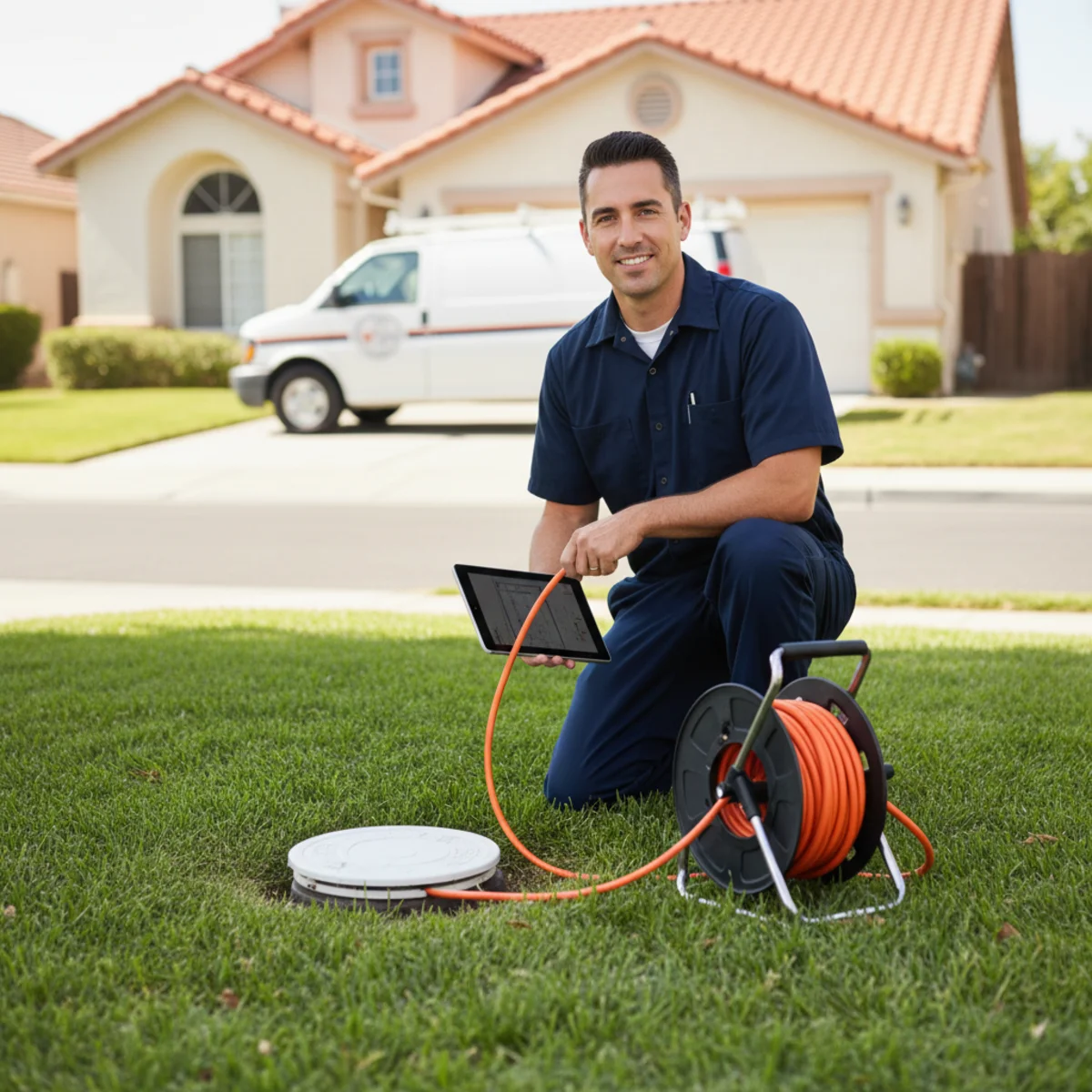
A sewer camera inspection uses a waterproof, high-definition camera mounted on a flexible cable to travel through your sewer line from inside the house to the municipal connection at the street. The plumber inserts the cable through the sewer cleanout — a capped pipe access point typically located in the yard or near the house foundation — and feeds it through the line while watching a live video feed on a monitor.
The camera transmits real-time color video of the pipe interior. As the cable advances, the technician notes the location and nature of any anomalies, usually using a locating transmitter in the camera head that allows them to pinpoint the exact position of a problem from the surface above. The entire inspection is typically recorded for documentation.
The process is non-invasive — no digging, no disruption to landscaping, and no guessing. It typically takes 30 to 60 minutes for a standard residential sewer line.
What It Can Detect
Sewer camera inspection reliably identifies conditions that no other diagnostic method can see:
- Root intrusion — where roots have entered the line and how extensively they've grown inside the pipe
- Cracks, breaks, or collapsed sections — including the location and severity
- Joint offset or separation — where pipe sections have shifted out of alignment
- Grease and debris accumulation — how much and where
- Mineral scale — calcified buildup that's narrowing the effective pipe diameter
- Pipe material assessment — whether the line is clay, cast-iron, PVC, or a combination
- Bellying — sections where the pipe has sagged and water/debris pools rather than flowing properly
For Redlands homes with pre-1980 clay or cast-iron sewer lines, camera inspection often reveals a combination of root intrusion and joint deterioration that explains repeated clogs better than any surface-level diagnosis could.
When to Schedule One
You should schedule a sewer camera inspection when:
- Multiple drains in the home are slow or backing up simultaneously
- You have recurring clogs that clear temporarily but return within weeks
- You smell sewage in or around the home
- You notice unusually lush or wet areas in the yard over the sewer line path
- Your home has large, established trees near the sewer line path
- A previous inspection revealed root intrusion and you want to check regrowth
- Your home is more than 30 years old and the sewer line has never been inspected
- You've had a sewer cleaning done and want to confirm the line is fully clear
It's also good practice after any major plumbing repair that involved work near the sewer line, to confirm no incidental damage occurred.
Buying a Home in Redlands
A sewer scope inspection (camera inspection scoped specifically for a real estate transaction) is one of the most valuable and often overlooked elements of a home purchase in Redlands. Standard home inspections don't include the sewer line, and buyers of older homes — particularly pre-1980s Redlands Heights, South Redlands, and Smiley Heights properties — routinely discover expensive sewer problems after closing.
A sewer camera inspection before you close gives you one of several outcomes: confirmation that the line is in good condition, discovery of a problem you can negotiate into the purchase price or repair terms, or a clear picture of what you'll be taking on. Given that sewer line repairs or replacements are among the costlier plumbing interventions, this is one of the highest-value pre-purchase inspections you can do.
We schedule sewer scope inspections that fit real estate transaction timelines throughout the Redlands area.
What Happens After the Inspection
After the inspection, the plumber will walk you through the findings — ideally while reviewing the recorded video so you can see what they see. If the line is clear and in good condition, that's confirmation you need nothing right now. If problems are found, the inspection gives you the specific information needed to choose the right repair approach.
For root intrusion in an otherwise intact line, hydro jetting is often the first step, followed by a periodic maintenance schedule. For cracked or offset pipe, the options depend on severity: trenchless pipe lining can rehabilitate lines with cracks that aren't too severe, while more significant damage may require excavation and replacement of the affected section. For lines that are significantly deteriorated throughout, full replacement — trenchless or traditional — is the right call.
The key advantage of camera inspection is that you're choosing your repair approach based on accurate information, not guesswork.
Cost and Value
Sewer camera inspection is one of the more cost-effective plumbing services relative to the information it provides. Knowing exactly what's wrong — and where — saves money on repairs by enabling targeted intervention rather than trial and error. Prices vary depending on line length, access, and location. Call (207) 419-2600 for current pricing in the Redlands area.
When you're considering the cost, keep in mind what it's preventing: a surprise sewer backup, an emergency excavation, or a home purchase that turns into an unexpected major expense. For most Redlands homeowners with older homes or recurring drain issues, it's a question of when, not whether, a camera inspection makes sense.
Need sewer camera inspection in the Redlands area?
A sewer camera inspection shows exactly what's in your Redlands Heights sewer line before problems get worse. Upfront pricing and fast local service.
Written & reviewed by the Redlands Heights Plumbing Pros team
Our licensed (CA C-36), local plumbers have handled the realities of Redlands-area homes for years — hard water, aging pipe, and slab leaks included. Questions about your home? Call (207) 419-2600 or request service.
Verify our CSLB license