The baking soda and vinegar drain method is safe for your pipes but far less effective than most homeowners hope — here's the honest assessment.
Key takeaways
- Baking soda and vinegar create a fizzing reaction that feels effective but moves little actual debris.
- The mixture is non-toxic and will not damage pipes, but it rarely clears a real clog.
- Chemical drain cleaners are far more corrosive and can soften PVC or accelerate pipe corrosion over time.
- For a slow drain, the combination can help as a mild maintenance rinse, not as a clog cure.
What the Reaction Actually Does
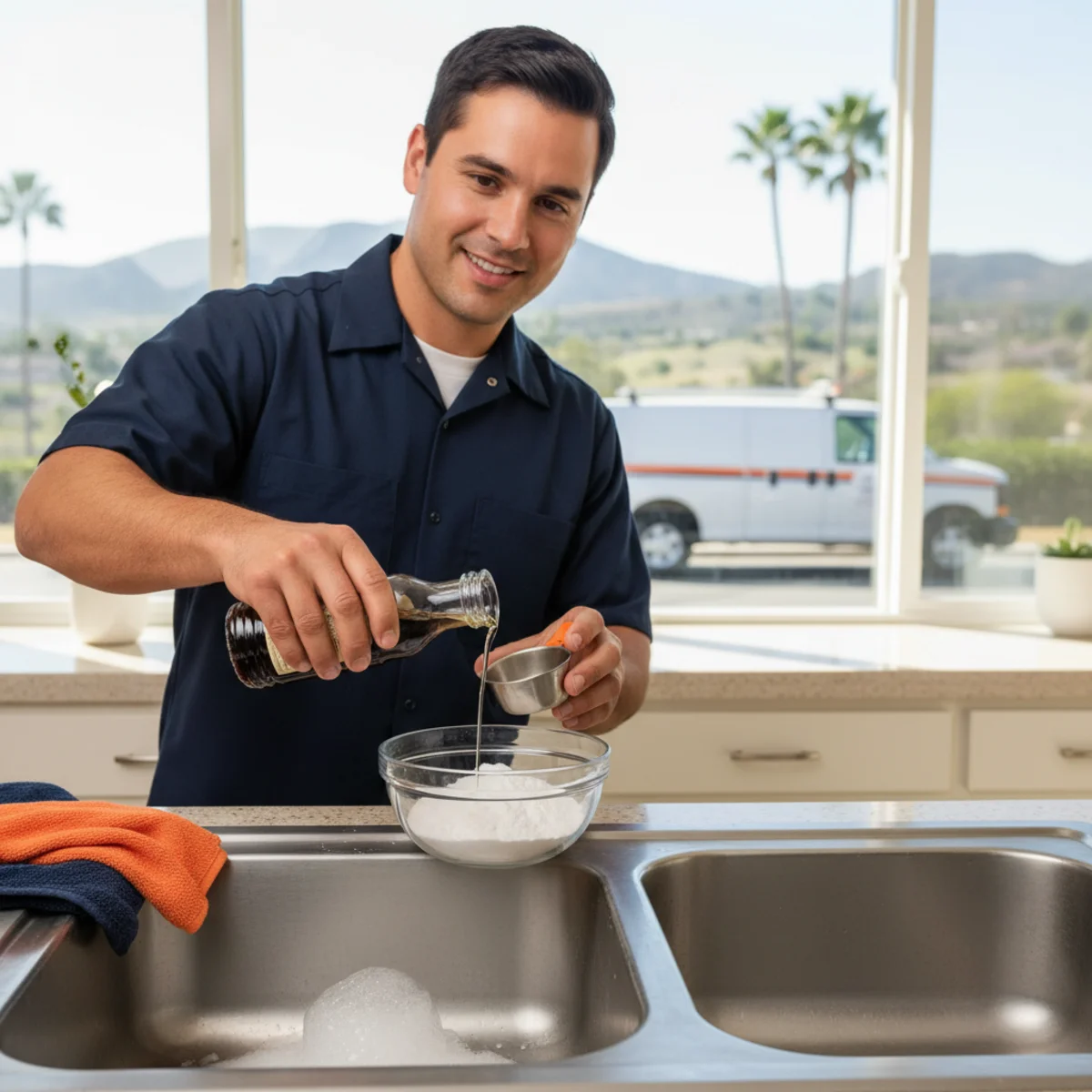
The fizzing reaction between baking soda (sodium bicarbonate) and white vinegar (dilute acetic acid) produces carbon dioxide gas, water, and sodium acetate. The reaction is satisfying to watch — active, fizzing, and vigorous — but the products of the reaction are mostly harmless and not particularly useful for clearing drain clogs.
The carbon dioxide bubbling may provide a small mechanical agitation effect, dislodging loose debris near the drain opening. The sodium acetate solution that remains is mildly alkaline and has some cleaning properties for soap film. But neither product dissolves hair, cuts grease effectively, or removes mineral scale.
The reason this method persists as popular advice is partly because it's safe and available in every kitchen, and partly because it sometimes works on the most marginal clogs — drains that were almost clear and needed only the slightest help. For those situations, the method gets credit for clearings that might have happened with a firm blast of hot water alone.
Is It Safe for Pipes?
Yes — baking soda and vinegar are safe for all common pipe materials. PVC, ABS, copper, cast iron, galvanized steel — none are harmed by the pH levels involved or the chemical products of the reaction. Unlike sodium hydroxide drain cleaners, the baking soda and vinegar combination doesn't generate significant heat and doesn't degrade rubber gaskets or PVC cement joints with repeated use.
From a pipe safety perspective, this is genuinely one of the safest drain-cleaning approaches available. It's also environmentally benign — the products wash into the sewer system without harm. For homeowners concerned about what goes down their drains in terms of chemical impact, it's a reasonable choice.
The safety advantage is real. The effectiveness advantage over simple hot water is much less clear.
What It Works On
The baking soda and vinegar method provides modest real benefit in two situations:
Maintenance deodorizing: The chemical interaction helps neutralize the odor-causing bacteria and organic matter in the upper portion of the drain and p-trap. If your drain smells and you want to address it without professional cleaning, baking soda followed by vinegar followed by a hot water flush is a reasonable monthly maintenance step.
Very minor partial blockages: If a drain is slightly slow — draining in 30 seconds instead of 10 — and the cause is a thin coating of soap scum or light grease near the drain opening, the method may provide enough cleaning action to restore normal drainage. Call this a marginal use case.
For anything beyond these scenarios — actual clogs, recurring slow drains, multiple drains slow at once, or drainage that's stopped entirely — baking soda and vinegar will not solve the problem.
What It Does Not Work On
The list of things this method cannot address is longer than what it can:
Hair clogs: The most common bathroom drain clog is a compacted mass of hair in the trap or just below it. Carbon dioxide bubbles do not dissolve hair. A drain tool (Zip-It, hair clog remover) or professional snaking is needed.
Grease accumulation: Cooking grease that has solidified inside a kitchen drain line requires either mechanical removal or hot water hydro jetting. Vinegar is not a degreaser at the concentrations used in this method.
Mineral scale: The hard calcium carbonate deposits from Redlands' hard water require an acid significantly stronger than 5% vinegar to dissolve meaningfully. Citric acid or phosphoric acid in professional descaling products is more effective. Vinegar has negligible effect on established scale inside drain pipes.
Root intrusion: Vegetation roots in a sewer line require mechanical cutting and hydro jetting. There is no home chemistry that affects this.
Deep clogs: Any clog more than a few inches below the drain opening is simply beyond the reach of a poured-in solution that gets diluted and loses any concentration before it reaches the problem.
More Effective Alternatives
For clogs that actually need clearing, these approaches are meaningfully more effective:
For hair in bathroom drains: a drain cleaning tool (flexible plastic strip with barbs, sold for a few dollars at hardware stores) physically pulls hair out. Far more effective than any poured solution.
For slow kitchen drains: boiling water poured slowly (not into toilet — hot tap water there) combined with dish soap can soften and flush mild grease near the opening. For established grease, professional drain cleaning or hydro jetting.
For toilet clogs: a flange plunger used with proper technique. No poured solution is effective in a toilet.
For any drain that's completely stopped: a plunger first, then professional help if the plunger doesn't resolve it.
Prevention is more valuable than any clearing method: mesh strainer covers in shower and tub drains catch hair before it enters. Never pouring cooking grease down any drain. Running cold water throughout garbage disposal use.
When to Stop DIY and Call
Call a professional plumber when the drain isn't responding to any DIY method, when multiple drains are slow or backed up at the same time, when you've cleared a drain and it reclogged within a few weeks, or when you see or smell sewage anywhere in the house.
In Redlands, recurring drain problems in older homes often have an underlying cause — scaled or corroded pipe, root intrusion in the sewer line, or improper drain slope from settling — that no home remedy addresses. A professional assessment identifies the real cause and produces a lasting fix rather than a temporary improvement.
Call (207) 419-2600 for drain cleaning, hydro jetting, or sewer camera inspection throughout Redlands and the Inland Empire.
Need drain cleaning in the Redlands area?
Professional drain cleaning for slow or blocked drains throughout your Redlands Heights home. Upfront pricing and fast local service.
Written & reviewed by the Redlands Heights Plumbing Pros team
Our licensed (CA C-36), local plumbers have handled the realities of Redlands-area homes for years — hard water, aging pipe, and slab leaks included. Questions about your home? Call (207) 419-2600 or request service.
Verify our CSLB license