Before calling a plumber, a few simple methods can clear many common drain clogs — here's what actually works and what to skip.
Key takeaways
- Boiling water poured slowly down a sink drain can dissolve soft soap-and-grease clogs effectively.
- A cup plunger works on sinks and tubs - create a tight seal and use firm, rapid strokes.
- Removing and cleaning the P-trap under a sink often reveals and eliminates the blockage directly.
- If DIY methods fail twice in a row, the clog is likely deeper in the line and needs a professional.
Proper Plunger Technique
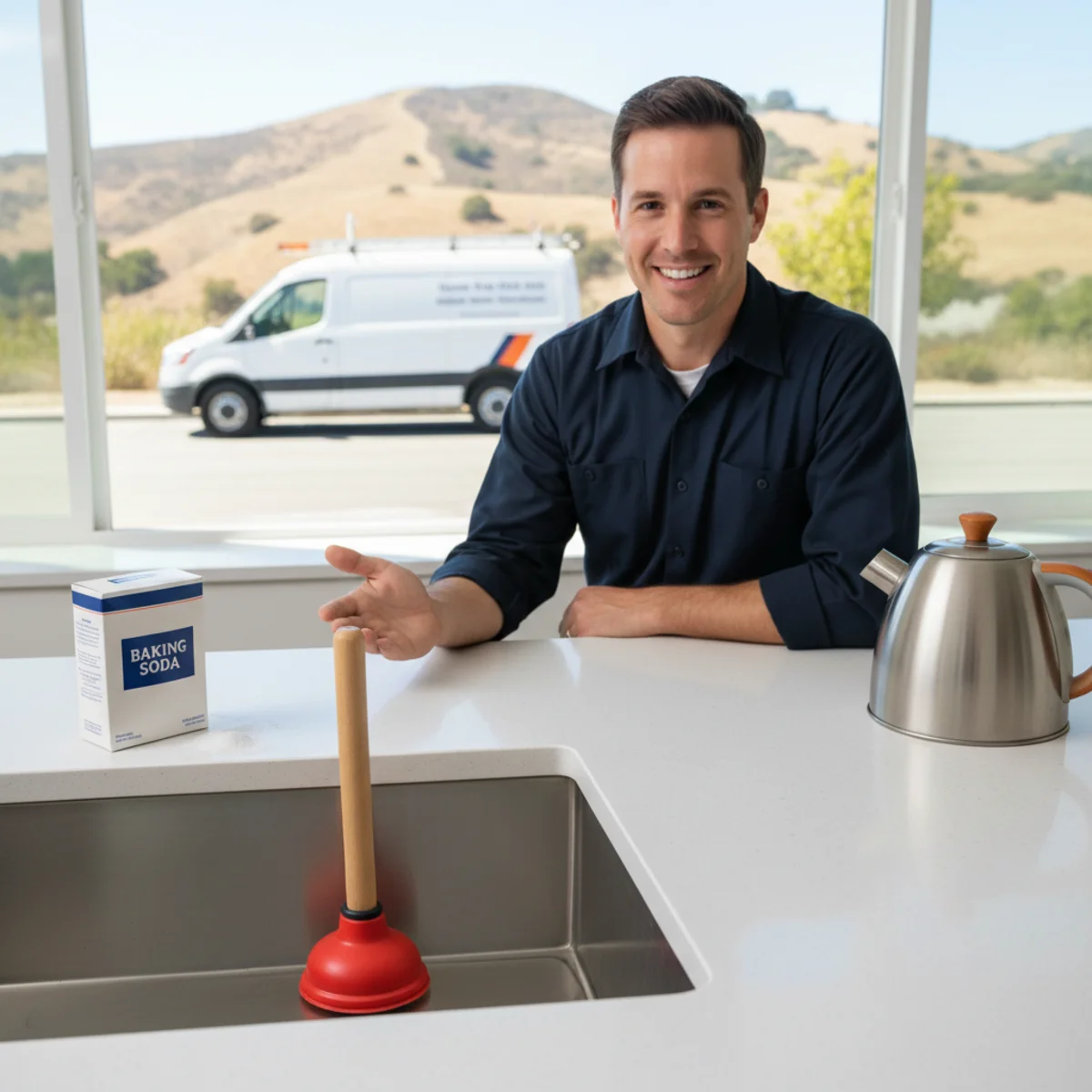
A plunger is more effective than most homeowners realize when used correctly — the technique matters. Use a cup plunger for sink and tub drains, or better yet a flange plunger (the kind with the cup extension) which creates a better seal in any drain.
For a bathroom sink clog: plug the overflow opening (the small hole near the top of the sink bowl) with a wet cloth before plunging. The overflow is a pressure-relief port — without blocking it, your plunging creates pressure that escapes through the overflow rather than pushing through the clog. With the overflow blocked, create a full seal over the drain with the plunger cup and pump firmly and rhythmically 10 to 15 times, then break the seal sharply by pulling up. Repeat several times.
For a tub drain: the overflow plate may have a mechanism connected to the stopper — plug that opening as well. The same technique applies.
Good plunging that breaks a clog loose produces a rush of draining water. If after five minutes of vigorous plunging there's no improvement, the clog is beyond what a plunger can reach.
Hot Water for Grease Clogs
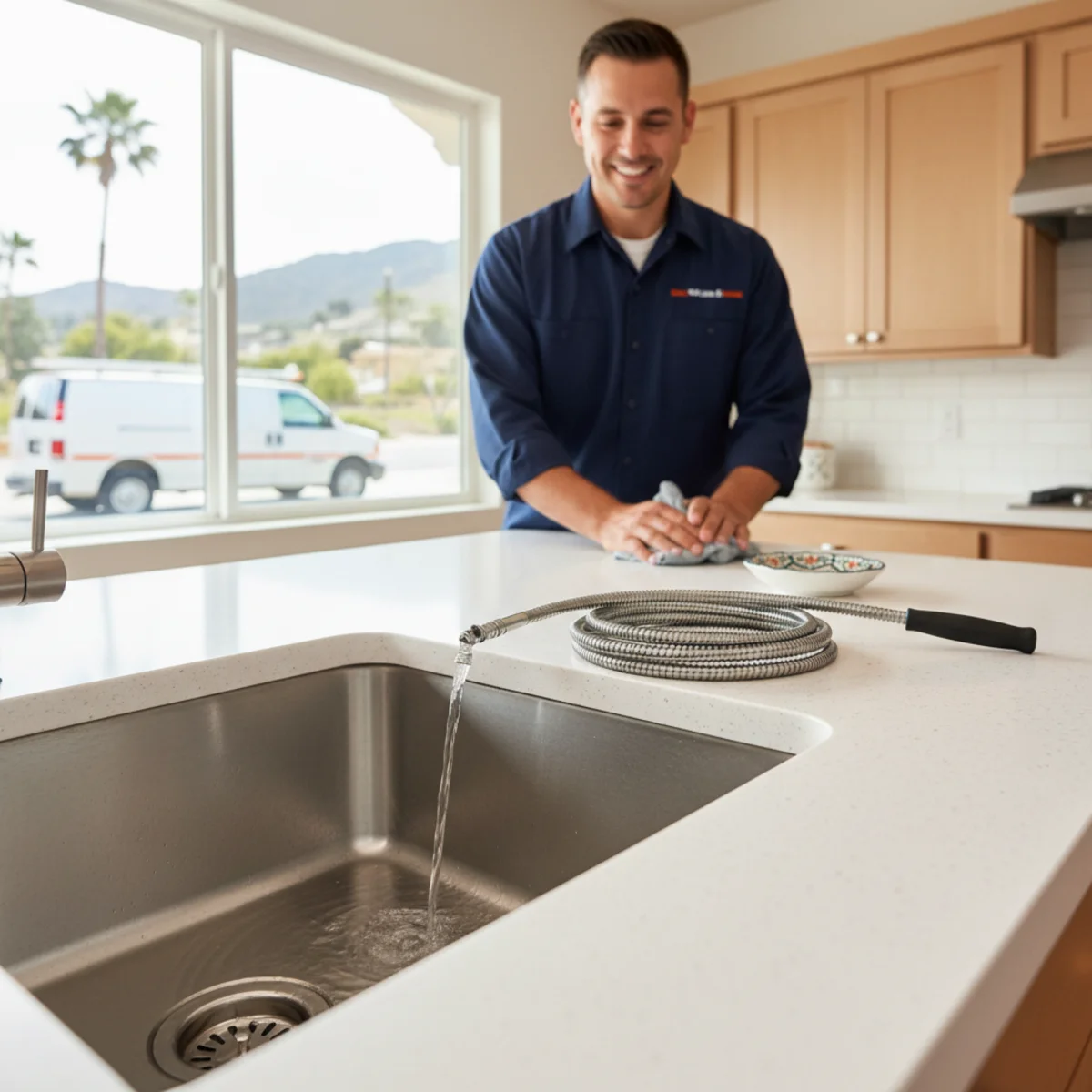
For kitchen drains where grease is the likely culprit, very hot tap water (not boiling — boiling water can damage PVC pipe joints) poured slowly down the drain can melt and flush grease buildup in the upper section of the drain. Run the hot water for several minutes continuously.
Adding a few drops of dish soap before the hot water helps because dish soap is a degreasing surfactant — it breaks up grease films the way it does on dishes. This is genuinely useful for a fresh, mild grease clog. For an established grease accumulation that has been building for months or years, hot water and dish soap will soften the surface but won't remove the full deposit.
Never pour boiling water into a toilet — the thermal shock can crack the porcelain.
Baking Soda and Vinegar
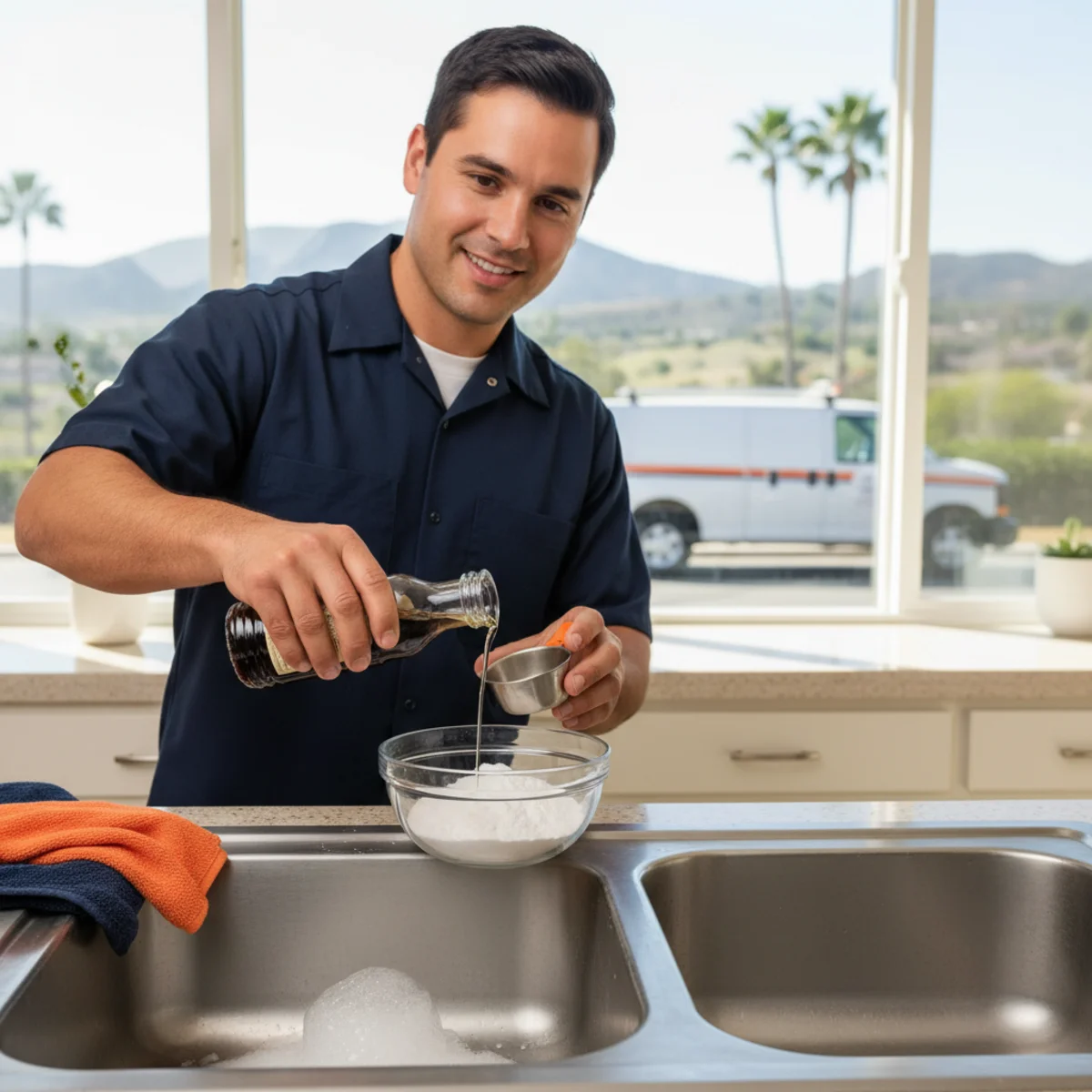
The baking-soda-and-vinegar fizz is satisfying to watch but mostly theatrical. The chemical reaction (sodium bicarbonate + acetic acid = carbon dioxide, water, and sodium acetate) produces foam and bubbling, but the practical effect on a drain clog is modest at best.
The fizzing action can dislodge loose, soft debris near the drain opening. For a drain that's almost clear with a small partial obstruction, it may provide the last bit of help needed. For an actual clog — compacted hair, hardened grease, or material further down the line — it typically does nothing useful. The fact that it's a common piece of advice doesn't make it particularly effective for real clogs.
What the combination does do safely: it deodorizes and cleans the visible portion of the drain, which has value as a maintenance step between cleanings. Pour baking soda, follow with vinegar, let it work for 15 minutes, then flush with hot water. It's a decent maintenance habit even if it's not a reliable clog-clearer.
Drain Cleaning Tools
For bathroom sink and tub drains clogged with hair, a Zip-It or similar flexible plastic drain cleaning tool is genuinely effective and inexpensive. These are narrow, flexible plastic strips with barbed hooks along their length. Insert, rotate slowly, and pull back — the barbs catch hair and pull it out. You may need to make multiple passes.
The results are often gross but effective. Hair clogs at or near the drain opening respond well to this approach.
For toilet clogs, a toilet auger (also called a toilet snake) is a consumer-grade tool designed specifically for the toilet's drain curve. A standard plunger that doesn't clear the clog in a few minutes should be followed up with a toilet auger before resorting to a professional call.
These tools are available at any hardware store for modest cost and are worth having on hand in any household.
What Not to Use
Two common approaches that should be used with caution or avoided:
Chemical drain cleaners (sodium hydroxide/lye products): These dissolve organic material — hair and soap — but are caustic, generate heat in the pipe, and over time degrade older PVC pipe joints and rubber gaskets. They're ineffective on grease or mineral scale, and the warning labels about not combining different drain cleaners are serious — some combinations produce toxic chlorine gas. If you use them, use them sparingly and don't assume they're fixing underlying buildup they can't reach.
Drain cleaning tools inserted forcefully: An aggressive hand snake inserted without care can scratch and scar the interior of a toilet bowl, damage older pipe joints, or get stuck. Consumer snake equipment used incorrectly can turn a clog into a bigger problem. When the DIY snake isn't working, stop and call rather than escalating force.
When DIY Has Run Its Course
Call a professional when:
- The plunger, hot water, and any appropriate drain tool haven't cleared the clog after a reasonable effort
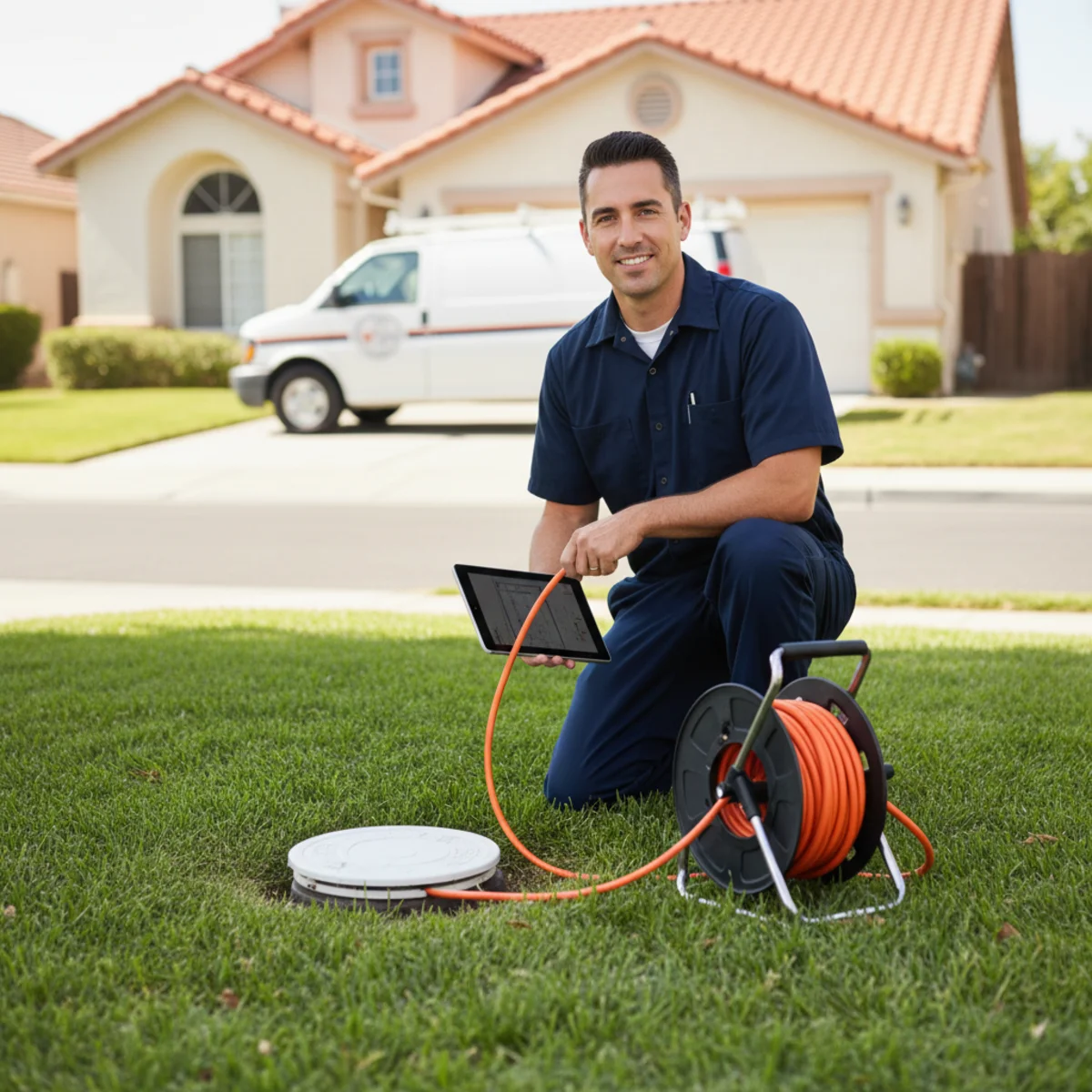
- Multiple drains in the house are slow simultaneously — this is a main line issue that no household tool addresses
- The clog cleared temporarily but came back within a week or two — this is a sign of buildup on the pipe walls or a structural issue, not a simple blockage
- You're hearing gurgling from other fixtures when one drains
- There's any sign of sewage backup in a tub or floor drain
Call (207) 419-2600 for professional drain cleaning in Redlands. We have the equipment to address what household tools can't reach, and we'll tell you honestly if the problem is something that needs more than cleaning.
Need drain cleaning in the Redlands area?
Professional drain cleaning for slow or blocked drains throughout your Redlands Heights home. Upfront pricing and fast local service.
Written & reviewed by the Redlands Heights Plumbing Pros team
Our licensed (CA C-36), local plumbers have handled the realities of Redlands-area homes for years — hard water, aging pipe, and slab leaks included. Questions about your home? Call (207) 419-2600 or request service.
Verify our CSLB license