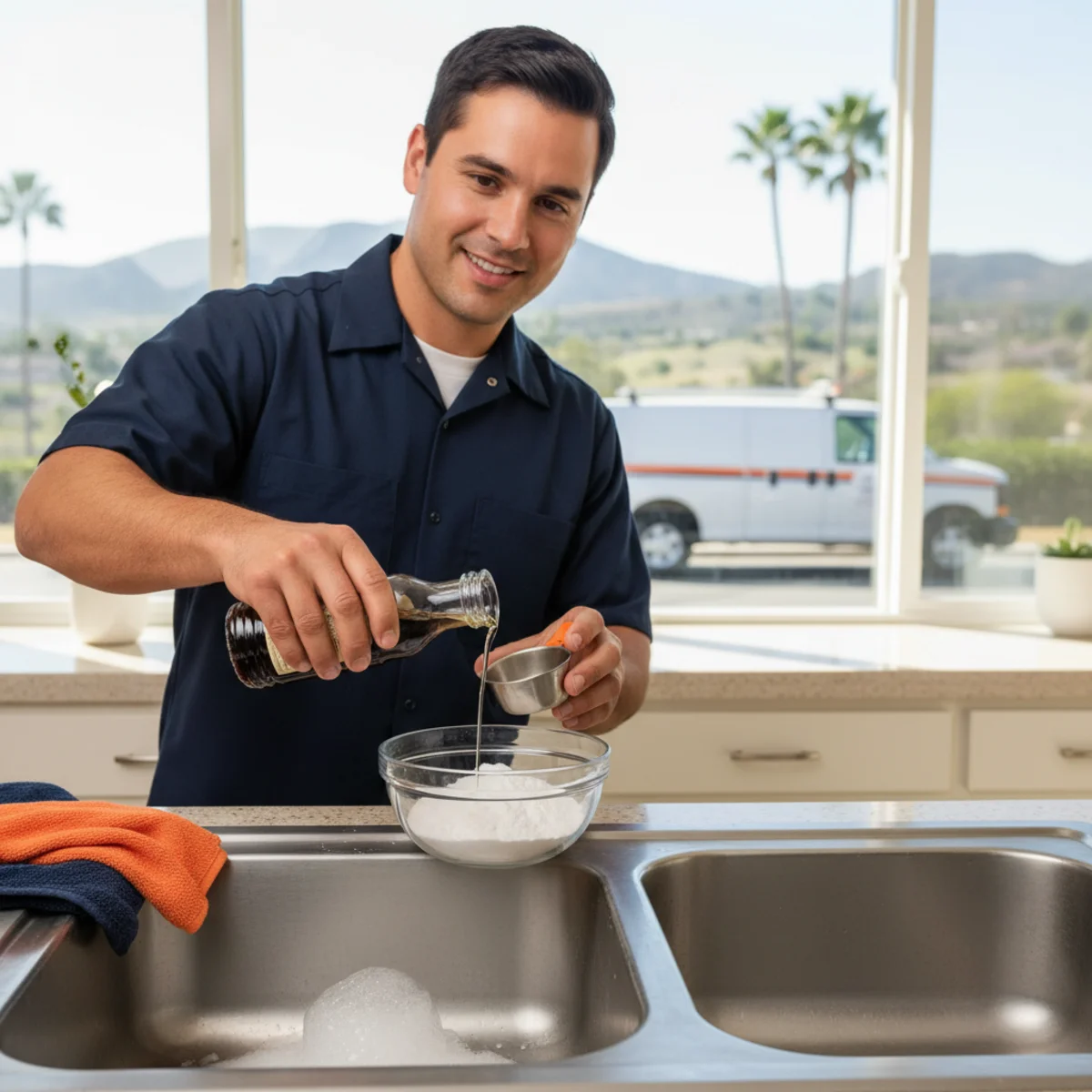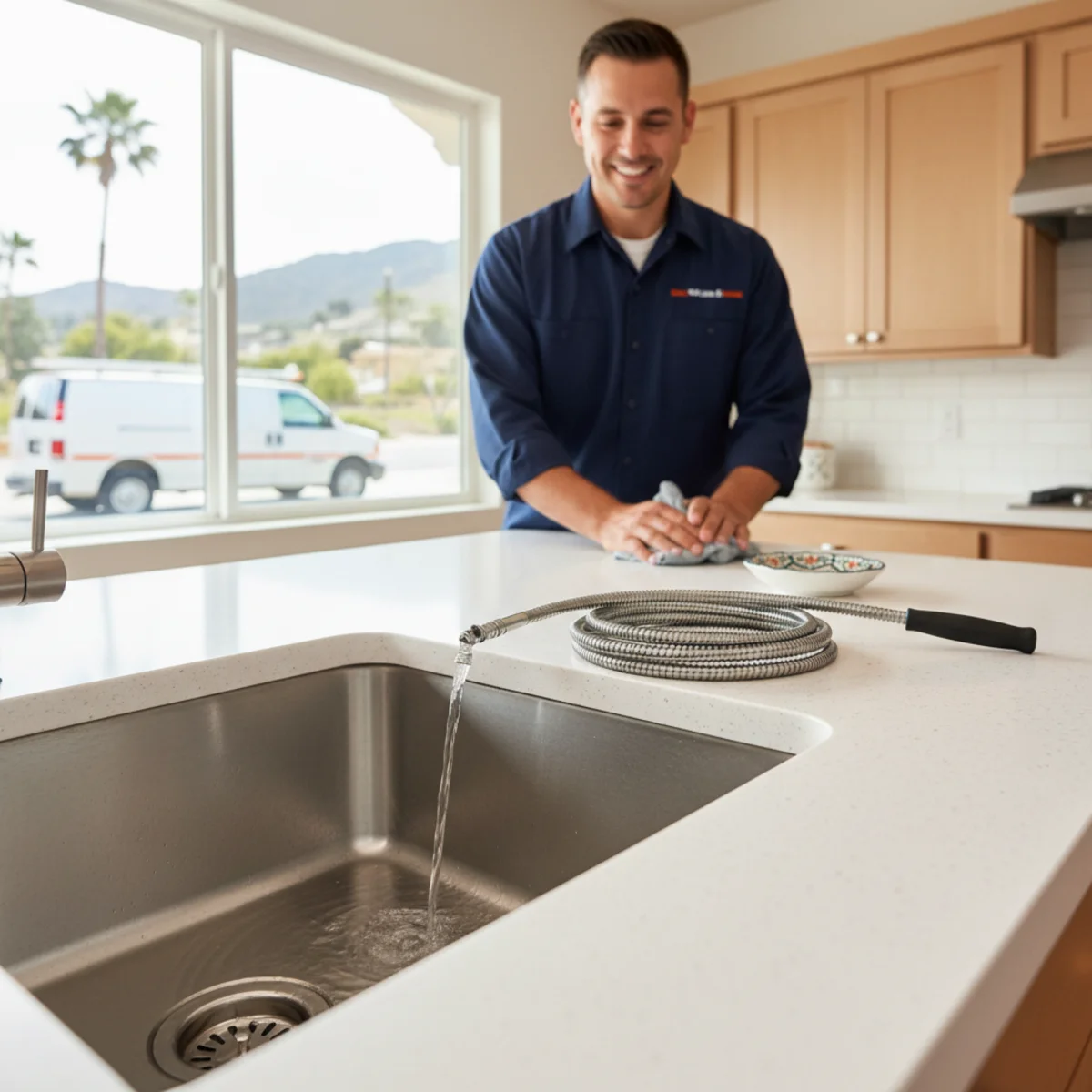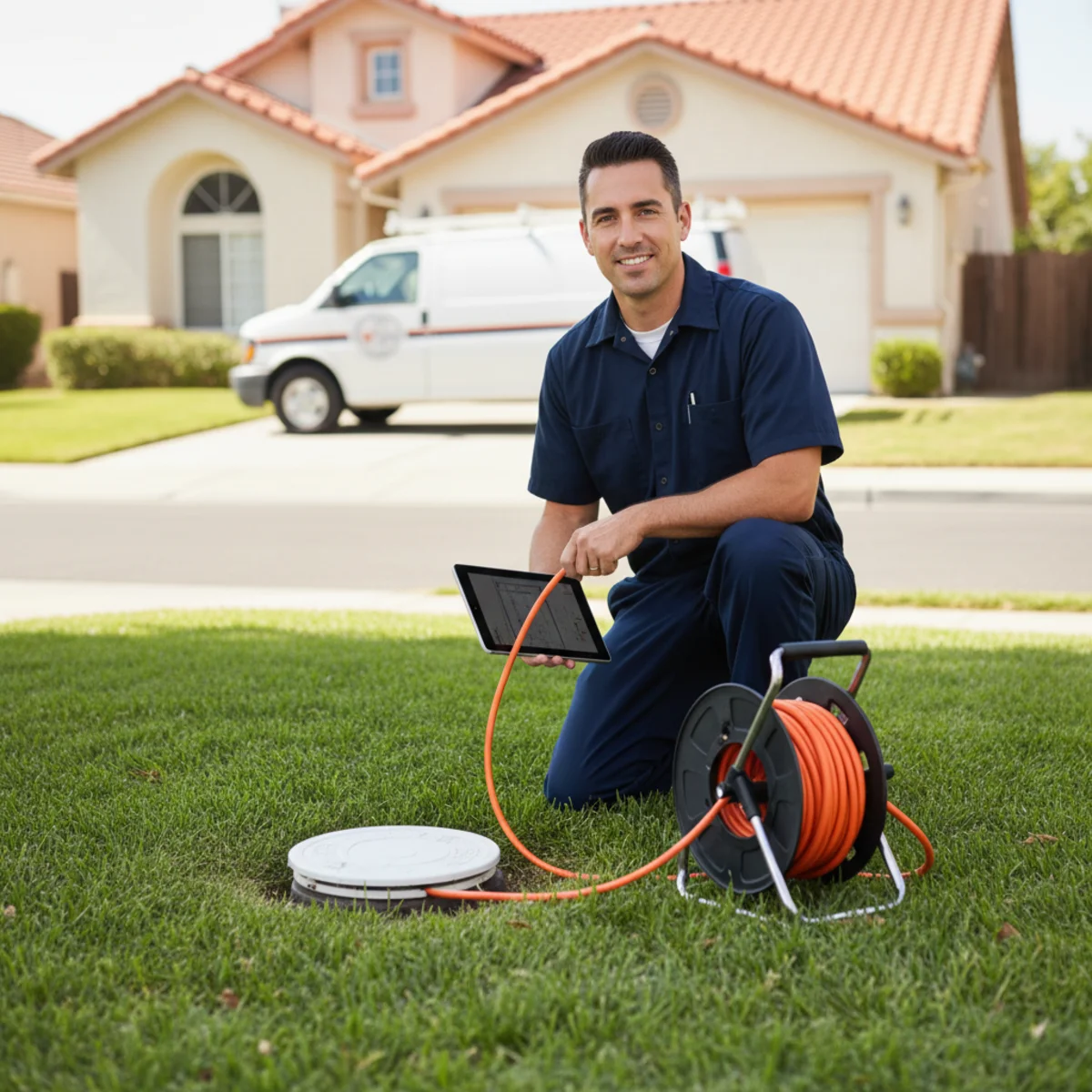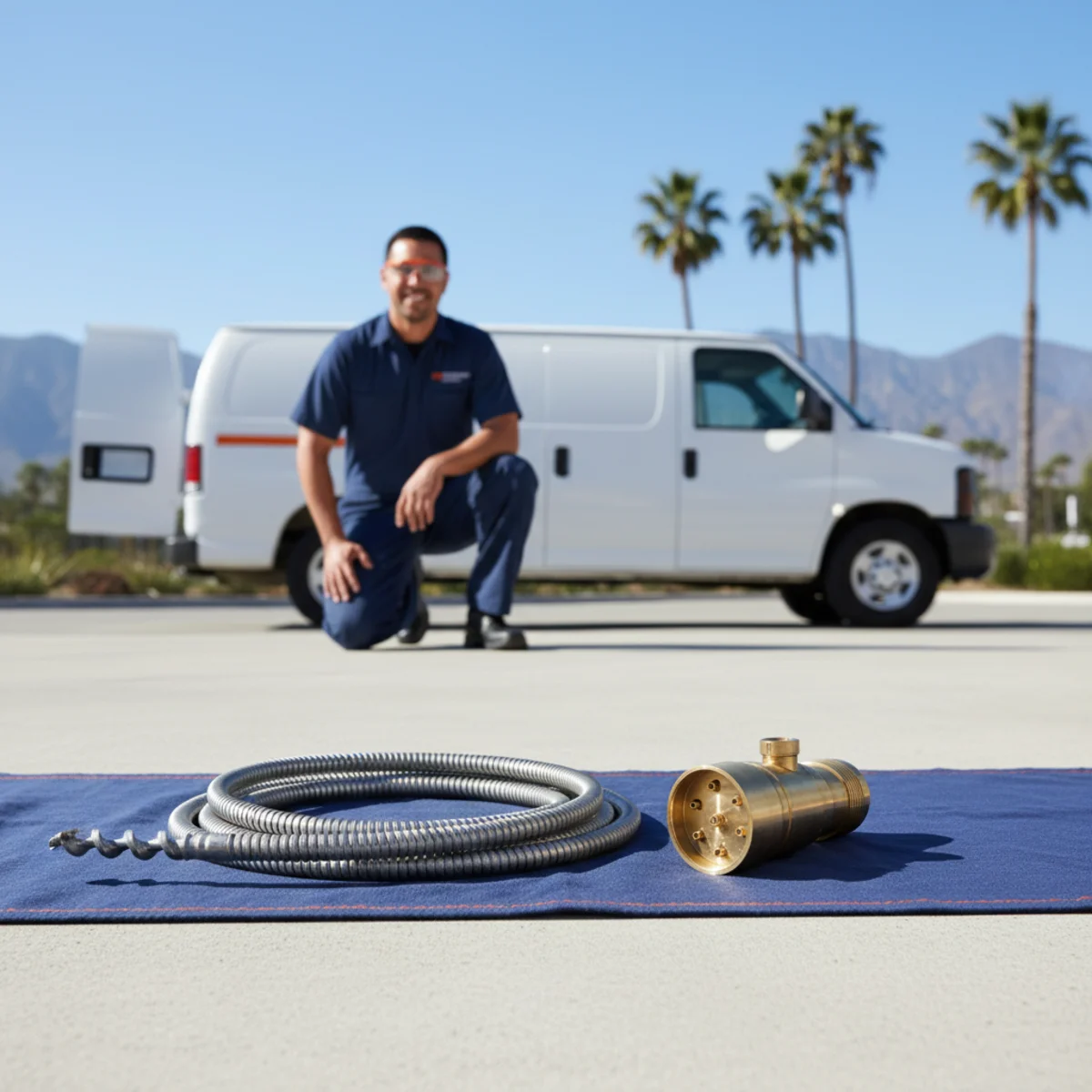
Drain cleaning and hydro jetting are not the same thing — knowing which your situation calls for can save money and prevent recurring clogs.
Key takeaways
- Standard drain snaking breaks through a clog but leaves grease and scale coating the pipe walls.
- Hydro jetting uses high-pressure water to scour the full interior of the pipe clean.
- Snaking is usually sufficient for a simple hair or soap clog in a single fixture.
- Hydro jetting is the better choice for recurring blockages or tree-root intrusion in sewer lines.
What Is Standard Drain Cleaning?
Standard drain cleaning uses a mechanical snake — a rotating cable with a cutting or retrieval head — to physically break apart or pull out obstructions in a drain line. The snake is fed through the drain opening and rotated as it advances, either chewing through a clog or catching and pulling it back out.
Professional drain cleaning equipment reaches significantly further and applies more force than the consumer-grade hand snakes available at hardware stores. Professional machines can typically reach 50 to 100 feet down a drain line — enough to address clogs in branch drains and many main sewer line blockages.
Drain snaking is effective for soft obstructions: hair clogs, cloth objects that fell in, or accumulated soft debris. It's fast, relatively inexpensive, and minimally disruptive. The limitation is that snaking punches through or removes the obstruction but doesn't clean the pipe walls — grease, soap scum, and mineral scale remain on the interior surfaces, ready to catch new debris.
What Is Hydro Jetting?
Hydro jetting uses water pressure — typically 1,500 to 4,000 psi — delivered through a specialized nozzle to scour the interior of a drain or sewer line. The nozzle both propels itself through the pipe with rear-facing jets and scours the pipe walls with forward jets. As it moves through the line, it strips grease, soap scum, mineral scale, and debris from the pipe walls rather than simply punching a hole through the blockage.
The result is a thoroughly cleaned pipe rather than a temporarily opened one. After hydro jetting, a sewer camera inspection typically shows pipe walls that look close to their original condition. The restored flow capacity and the clean pipe surface — which doesn't catch debris as readily as a coated surface — mean significantly longer intervals between service needs.
Hydro jetting requires professional equipment and expertise. Pressure must be appropriate for the pipe material and condition — too much pressure in a fragile or cracked line can cause damage. This is why camera inspection before jetting older lines is standard practice.
When to Use Each Method
Use standard drain snaking when:
- A single drain is clogged with identifiable material (hair, a small object)
- The clog is near the drain opening and responsive to a plunger
- The drain was clear recently and this is a first-time or occasional occurrence
- Cost is the primary concern and the pipe is in good condition
Use hydro jetting when:
- Drains are slow despite repeated snaking, indicating the pipe walls are coated
- Multiple drains are slow throughout the house (main line issue)
- There's root intrusion in the sewer line that needs to be cleared
- It's been several years since the last professional drain cleaning
- A camera inspection revealed significant grease or scale accumulation
- You want the most thorough, longest-lasting result
Grease, Scale, and Root Intrusion
For three specific types of drain problems, hydro jetting is clearly the superior tool:
Grease: Mechanical snaking can push through a grease accumulation but leaves the greasy coating on pipe walls. Hot-water hydro jetting at appropriate pressure emulsifies and flushes grease from the pipe walls, restoring original flow capacity. In Redlands restaurants and residential kitchens with years of grease buildup, the difference between snaking and jetting is dramatic and immediate.
Mineral scale: The hard calcium carbonate scale that accumulates in Redlands' hard water environment cannot be removed by a mechanical snake. Hydro jetting with appropriate nozzles and adequate pressure can chip and flush scale deposits, though heavily calcified lines may need multiple passes or may require relining or replacement.
Root intrusion: A snake can cut through roots but doesn't remove the root material from the pipe — root fragments remain and provide anchor points for new growth. Hydro jetting with a root-cutting nozzle cuts roots more thoroughly and flushes the material downstream, producing a cleaner result and a longer interval before roots reestablish.
Pipe Age and Condition
Before recommending hydro jetting for older Redlands homes with pre-1980s clay or cast-iron sewer lines, a camera inspection is appropriate. Lines that are cracked, have offset joints, or are structurally fragile may not tolerate full jetting pressure. We'll assess the line first and adjust our approach accordingly.
Modern PVC sewer lines handle hydro jetting well. Copper and PVC supply lines should not be hydro jetted — the process is specific to drain and sewer lines. For supply line issues, the approach is different.
If a camera inspection reveals that a line is too deteriorated for jetting — severely cracked or with multiple offset sections — the conversation shifts to repair or relining rather than cleaning.
Cost Comparison
Standard drain snaking is less expensive per service call than hydro jetting. However, if snaking a kitchen drain produces only temporary results that require retreating every few months, the cumulative cost of repeated service calls can exceed a single hydro jetting session that keeps the drain clear for a year or more.
When evaluating cost, think in terms of cost per year of clean drain rather than cost per service call. Hydro jetting that keeps a drain clear for 18 months often compares favorably to drain snaking three times in the same period.
Call (207) 419-2600 to discuss which approach makes sense for your specific situation. We'll give you an honest recommendation based on the history of the problem, not just what costs more.
Need hydro jetting in the Redlands area?
Hydro jetting blasts years of grease, scale, and root debris out of your Redlands Heights drain and sewer lines. Upfront pricing and fast local service.
Written & reviewed by the Redlands Heights Plumbing Pros team
Our licensed (CA C-36), local plumbers have handled the realities of Redlands-area homes for years — hard water, aging pipe, and slab leaks included. Questions about your home? Call (207) 419-2600 or request service.
Verify our CSLB license