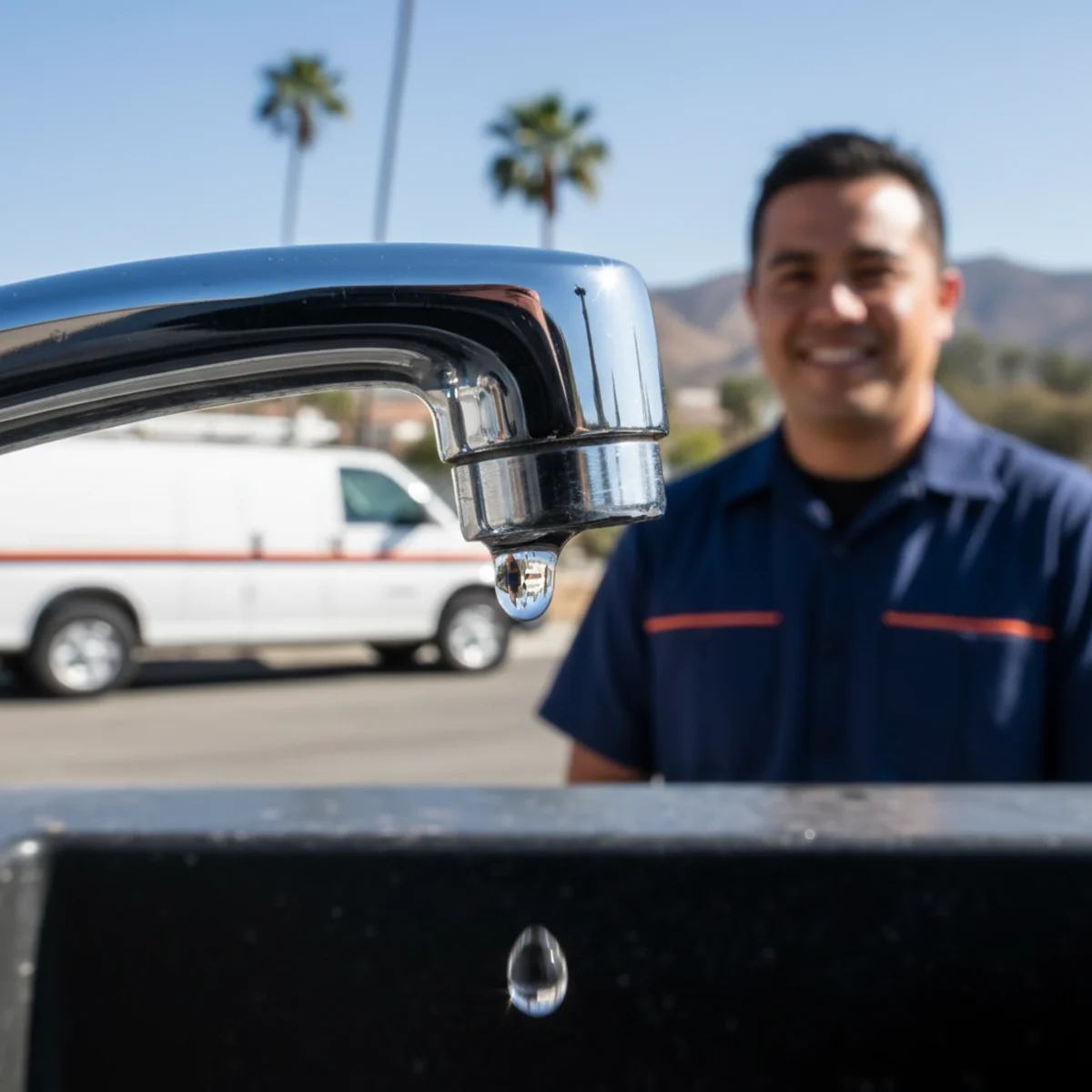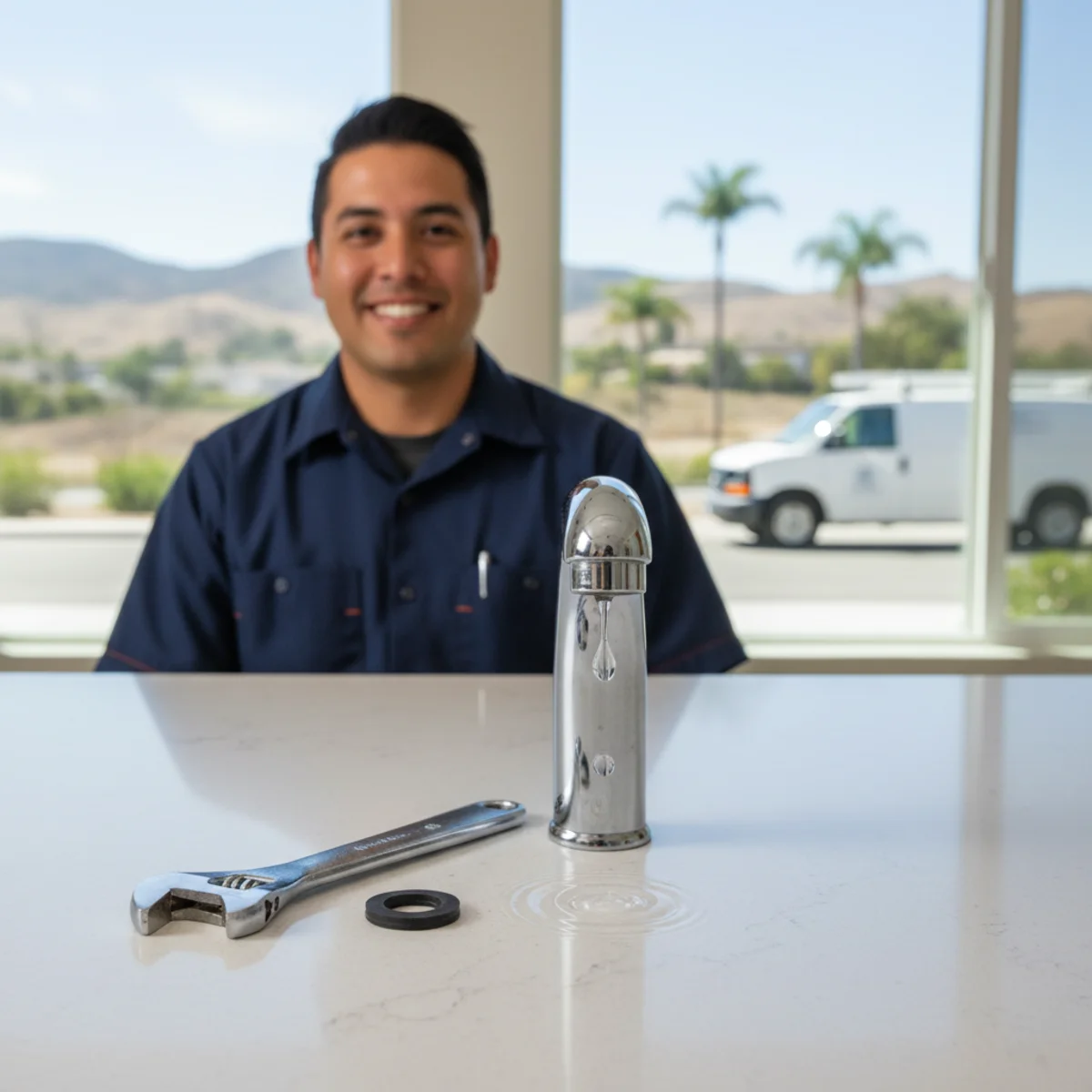
A dripping faucet has a fixable cause — usually a worn washer, O-ring, or cartridge. Here's how to stop it based on your faucet type.
Key takeaways
- Identify your faucet type first - ball, cartridge, ceramic disc, and compression faucets all differ internally.
- Turn off the water supply at the shutoff valve under the sink before disassembling anything.
- Most drips trace to a worn washer, O-ring, or cartridge - replacement parts are available at hardware stores.
- Reassemble carefully and test slowly - overtightening fittings can crack valve seats and cause new leaks.
Before You Start
Before opening any faucet for repair, shut off the water supply. For a sink faucet, the shut-off valves are under the sink — one for hot, one for cold. Turn both clockwise until they stop. Then open the faucet to relieve any remaining pressure and drain the supply lines.
Cover the drain opening with a rag or close the stopper — small springs, screws, and O-rings can fall down the drain during disassembly and are miserable to retrieve or replace.
Identify your faucet type before beginning. The four main residential faucet types are compression (older two-handle), ball (single-handle with a ball mechanism), cartridge (single or double-handle), and ceramic disc (found in higher-end fixtures). The repair approach is different for each.
Compression Faucets
Compression faucets are the classic older-style fixtures often found in pre-1980s Redlands homes — two handles that tighten down to shut off flow. When a compression faucet drips, it's almost always a worn rubber washer or a degraded valve seat.
Remove the handle by unscrewing the decorative cap and the screw underneath, pull the handle off, then use a wrench to unscrew the packing nut. The stem will come out, and at its base you'll find a rubber washer held by a brass screw. Replace the washer with one of the correct size (take the old one to the hardware store to match it).
If a new washer doesn't stop the drip, the valve seat — the metal surface the washer presses against — is likely corroded or pitted. A valve seat wrench can remove and replace it, or a valve seat grinder can resurface it in place. This is where Redlands' hard water complicates what seems like a simple washer replacement.
Ball Faucets
Ball faucets (common in kitchen single-handle designs) contain a rotating ball that controls hot and cold water mix and flow. They have more internal parts than other types: a ball, two springs, two valve seats, and multiple O-rings. When a ball faucet drips from the spout, it's usually the springs and seats. When it leaks at the base, it's typically the O-rings around the ball housing.
The most practical repair approach is a complete ball faucet repair kit for your brand — these kits include all the parts in one package and are much more reliable than trying to replace individual components. Remove the handle and cap, extract the ball, springs, and seats, replace them all with kit parts, and reinstall. Take photos before disassembly if you're not familiar with the mechanism.
Cartridge Faucets
Cartridge faucets contain a self-contained cartridge that controls water flow and temperature. When they drip, it's almost always the cartridge itself that needs replacement rather than an individual internal component.
Remove the handle, expose the cartridge retaining clip or retaining nut, pull the cartridge straight up and out. Bring the old cartridge to a plumbing supply store — the correct replacement must match your specific brand and model. Moen, Delta, Kohler, and Price Pfister all use proprietary cartridges that aren't interchangeable. Installing a wrong-size cartridge will drip just as badly as the old one.
Note the orientation of the cartridge before pulling it — the ears on the sides need to align correctly on reinstallation for the hot and cold to be oriented properly.
Ceramic Disc Faucets
Ceramic disc faucets have a cylinder housing two ceramic plates that slide past each other to control flow. The ceramic discs themselves rarely fail, but the rubber seals (seats and O-rings) around them do. If a ceramic disc faucet drips, it usually means the seals need replacement or the discs need cleaning.
Remove the handle and the decorative cap or sleeve to expose the cylinder. Take out the cylinder and turn it over — you'll see three rubber seals on the bottom. Replace these with the appropriate replacement seals (available from the faucet manufacturer or a plumbing supply store).
If the seals look fine but the faucet still drips, the ceramic discs may have a hairline crack. At that point, replacing the entire cylinder is the practical repair.
When to Call a Professional
Call us for faucet repair when:
- The correct replacement part isn't available or can't be identified
- You've replaced the obvious components but the drip persists — often indicating a damaged valve seat or faucet body
- The faucet body itself is cracked or corroded
- The repair is in a wall or ceiling (concealed shower valve) rather than under a sink
- The drip is from beneath the sink at supply connections rather than from the spout — a different type of leak entirely
Faucet repair is one of the most common service calls we handle. If it turns out the faucet is too old or damaged for economical repair, we can also recommend and install a replacement. Call (207) 419-2600 for faucet service throughout Redlands and Redlands Heights.
Need faucet repair in the Redlands area?
Fix dripping, leaking, or hard-to-operate faucets in your Redlands Heights kitchen and bathrooms. Upfront pricing and fast local service.
Written & reviewed by the Redlands Heights Plumbing Pros team
Our licensed (CA C-36), local plumbers have handled the realities of Redlands-area homes for years — hard water, aging pipe, and slab leaks included. Questions about your home? Call (207) 419-2600 or request service.
Verify our CSLB license