Most garbage disposal failures fall into a handful of common causes — some fixable with a hex key, others that signal it's time for a replacement.
Key takeaways
- A tripped reset button at the bottom of the unit is the most common and easiest fix.
- Humming with no blade movement means a jam - use an Allen wrench at the base to free it.
- Grinding hard items like bones or fruit pits is the leading cause of motor and blade damage.
- If the unit is leaking from the sink flange, the mounting seal has likely failed and needs replacement.
No Power or Hum
If the garbage disposal is completely silent when you flip the switch — no hum, no sound at all — the problem is almost certainly electrical rather than mechanical.
Start with the reset button. On the bottom of the disposal unit, there's a small red or black reset button. If the disposal tripped its internal overload (from jamming or a power surge), this button pops out. Press it firmly until you feel it click, then try the switch again.
If the reset button doesn't fix it, check the circuit breaker for the disposal's circuit. Disposals are sometimes on their own breaker. If that's also fine, the problem may be the wall switch or the wiring to the unit. At that point it's worth calling for a professional look — disposals are hardwired into the electrical system and the switch connection can fail over time.
Hums But Won't Spin
A disposal that hums when switched on but doesn't grind is jammed. The motor is energizing but the grinding plate can't rotate because something is lodged between the plate and the grinding ring. Turn the switch off immediately — running the motor in a stalled condition for more than a few seconds trips the overload and can burn out the motor over time.
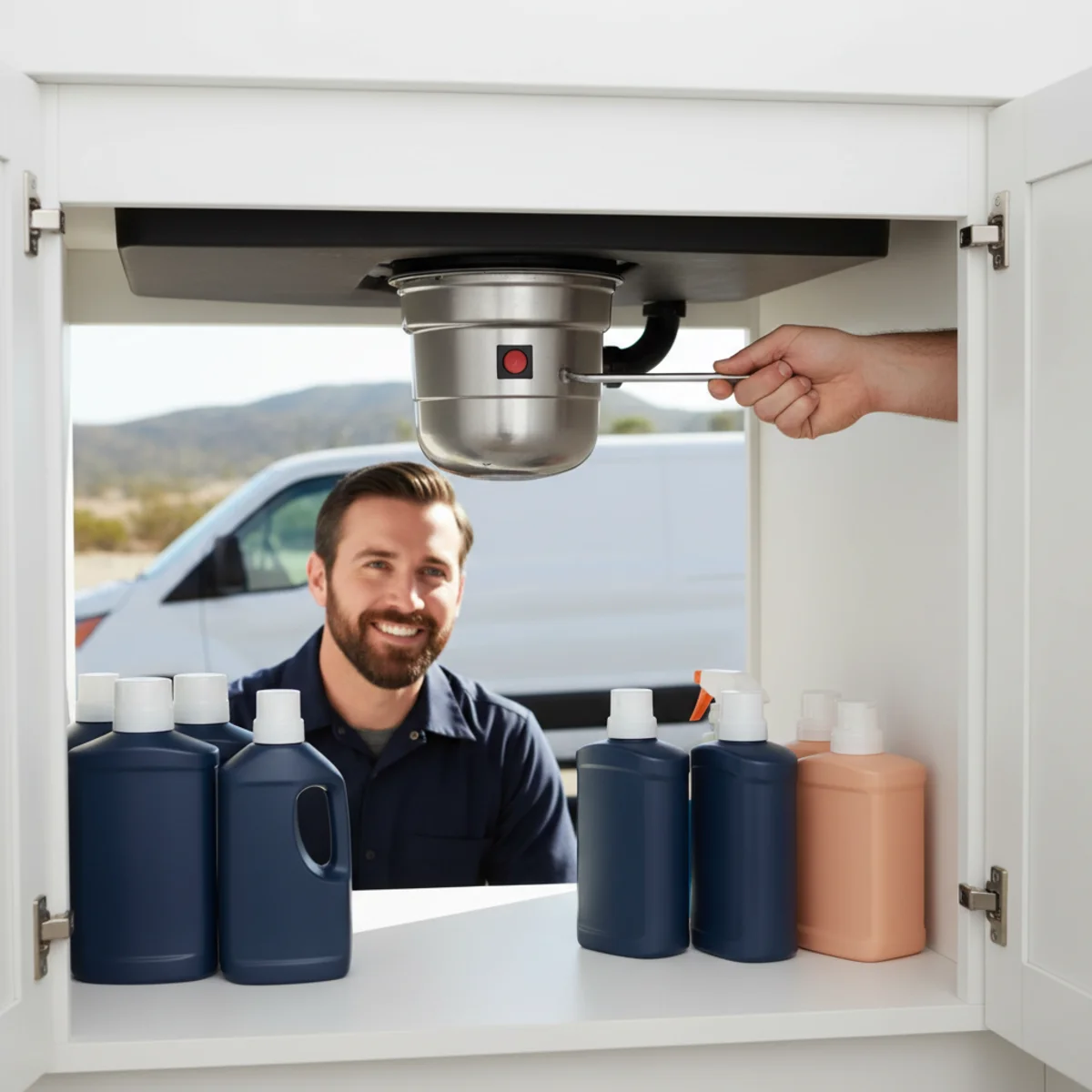
The fix: most disposals come with a small hex (Allen) wrench that fits a socket in the center bottom of the unit. Insert it and turn back and forth to manually free the jam. Once you feel it rotate freely, use a flashlight and tongs or needle-nose pliers (never your fingers) to remove the object that caused the jam. Press the reset button and test. Do not use the switch repeatedly while jammed.
Disposal Is Leaking
Leaks from a garbage disposal can come from three locations, each indicating a different cause:
From the top (where the disposal mounts to the sink): the sink flange seal has failed. The mounting assembly needs to be unseated, the old plumber's putty removed and replaced, and the unit remounted. This is a moderately involved repair but not complex.
From the side (at the drain outlet where it connects to the drain pipe or dishwasher discharge): the rubber gasket or clamp at that connection has deteriorated. These connections can usually be resealed with a replacement gasket or tightened clamp.
From the bottom of the disposal body: the internal seal around the motor shaft has failed. This is an internal failure and in most cases signals that the unit has reached end of life — replacement is generally more practical than internal seal repair on a garbage disposal.
Drains Slowly After Running
If the disposal grinds fine but water drains slowly from the sink, the issue is downstream — not in the disposal itself. Grease, food starch from potatoes or pasta, and fibrous material (celery, onion skins) that passes through the disposal can accumulate in the drain line under the sink and in the line running to the stack.
Run cold water for a full minute after using the disposal to flush ground material through the drain. For an established grease buildup, a professional drain cleaning of the branch line under the sink is typically the effective remedy. Avoid pouring boiling water into the disposal drain regularly — it can soften the PVC drain connections and isn't as effective for grease as running cold water while grinding.
Persistent Bad Odors
A disposal that smells bad even when it's working normally has accumulated decomposing food material on the grinding components, under the splash guard, or inside the grinding chamber. The underside of the rubber splash guard — the black rubber flap that covers the drain opening — is a common culprit. It accumulates a black, slimy buildup that most homeowners don't clean because it's not visible.
Clean the splash guard by scrubbing its underside with a brush and dish soap or a dilute bleach solution. Grind ice cubes in the disposal (run cold water throughout) to scour the grinding components. Citrus peels run through the disposal add a fresh scent temporarily. For persistent odor, a product like disposal cleaning tablets can reach areas a brush doesn't. If odors persist despite cleaning, the disposal may have accumulated material in areas that can't be effectively cleaned without disassembly.
Repair vs. Replacement
Garbage disposals typically last 8 to 15 years. The math on repair versus replacement is relatively simple: if the repair cost approaches or exceeds a third of the replacement cost for a new unit, and the disposal is over eight years old, replacement often makes more sense.
Situations that clearly favor replacement: a leak from the bottom of the unit (internal seal failure), a motor that repeatedly trips the overload or smells like burning, or a unit that's over ten years old and needing its second significant repair.
Situations that favor repair: a jam fix (costs only time), a reset button issue, a leaking flange seal on a unit that's otherwise functioning well, or a side-drain connection leak. We can assess whether your disposal is worth repairing or due for replacement and give you a straightforward recommendation. Call (207) 419-2600 for disposal repair or replacement in Redlands.
Need garbage disposal repair in the Redlands area?
Fix a jammed, humming, leaking, or dead garbage disposal in your Redlands Heights kitchen. Upfront pricing and fast local service.
Written & reviewed by the Redlands Heights Plumbing Pros team
Our licensed (CA C-36), local plumbers have handled the realities of Redlands-area homes for years — hard water, aging pipe, and slab leaks included. Questions about your home? Call (207) 419-2600 or request service.
Verify our CSLB license