With water hardness levels well above the national average, Redlands homeowners deal with scale buildup that shortens equipment life and degrades plumbing performance.
Key takeaways
- Redlands water is considered hard, with high dissolved mineral content from Inland Empire groundwater.
- Scale buildup inside pipes and water heaters reduces efficiency and shortens equipment lifespan.
- Faucet aerators and showerheads clog more quickly in hard-water areas and need regular cleaning.
- A whole-house water softener can meaningfully extend the life of appliances and plumbing fixtures.
What Is Hard Water?
Hard water contains elevated concentrations of dissolved minerals — primarily calcium and magnesium carbonate. These minerals are geologically common in the Inland Empire, where groundwater and imported water sources both carry high mineral loads. Redlands municipal water typically tests in the 250 to 350 mg/L (ppm) range, which is classified as "very hard." By comparison, anything under 60 ppm is considered soft.
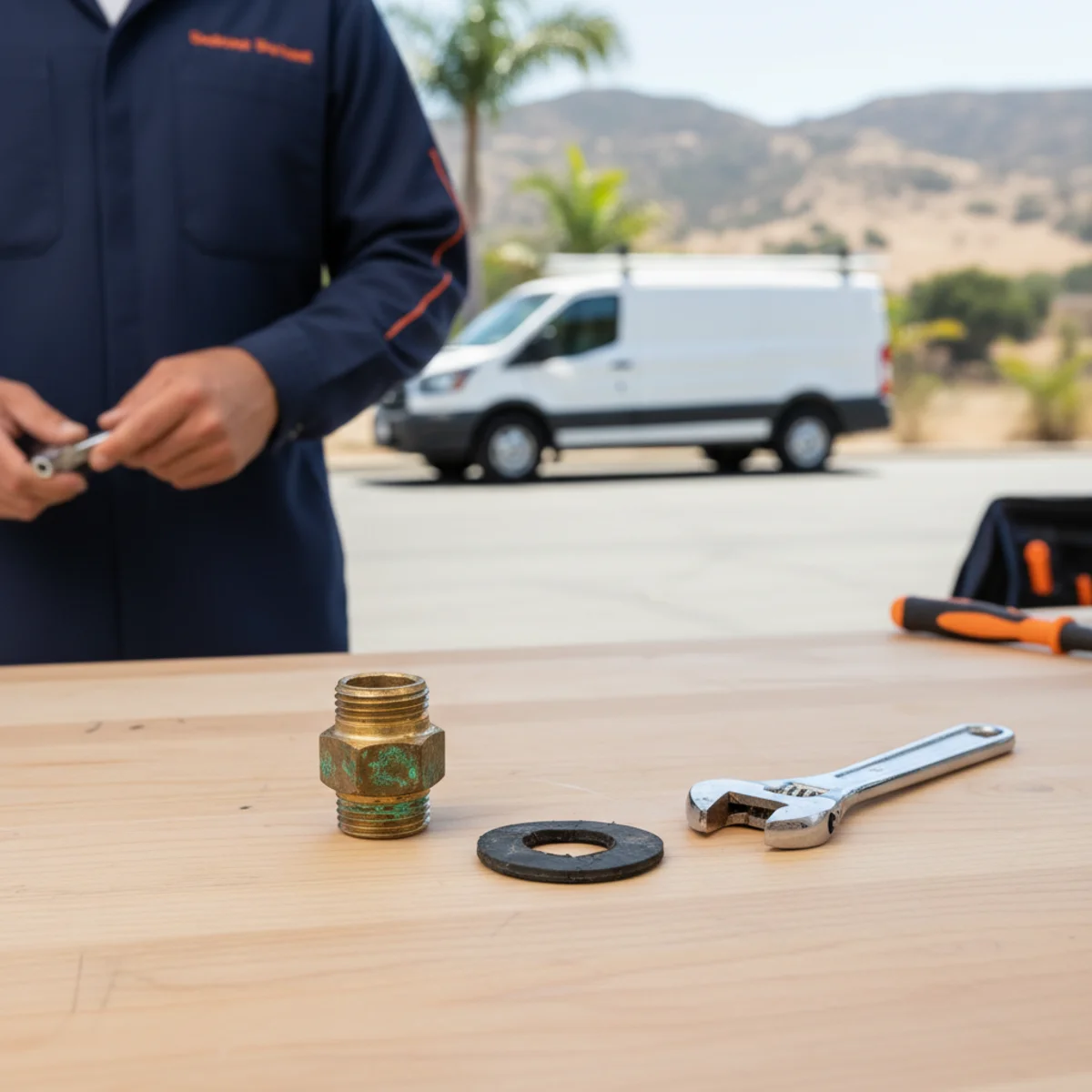
These minerals aren't a health concern in themselves — calcium and magnesium are nutrients — but their behavior when water is heated or evaporates causes significant problems throughout a plumbing system. When hard water is heated, calcium carbonate becomes less soluble and precipitates out of solution, forming the hard, chalky scale deposits that Redlands homeowners know well from shower doors, faucets, and coffee makers.
Impact on Water Heaters
The most significant and costly effect of hard water on residential plumbing is what it does to water heaters. As cold water enters the tank and is heated, calcium carbonate flakes out and settles to the bottom. Over months and years, this sediment layer grows — first as loose particles, then progressively calcifying into a hard, concrete-like crust on the tank floor and around the heating element.
For a gas water heater, the burner must heat through this insulating scale layer to raise the water temperature, consuming more gas and subjecting the tank bottom to higher temperatures than it was designed for. This accelerates tank corrosion and shortens the unit's life. The rumbling or popping sounds that signal a water heater's decline are the sound of water superheating and percolating through the sediment layer.
Regular annual flushing and anode rod replacement slow this process, but in Redlands' hard water environment these maintenance tasks are more critical — and more neglected — than in softer water areas.
Scale in Pipes and Fixtures
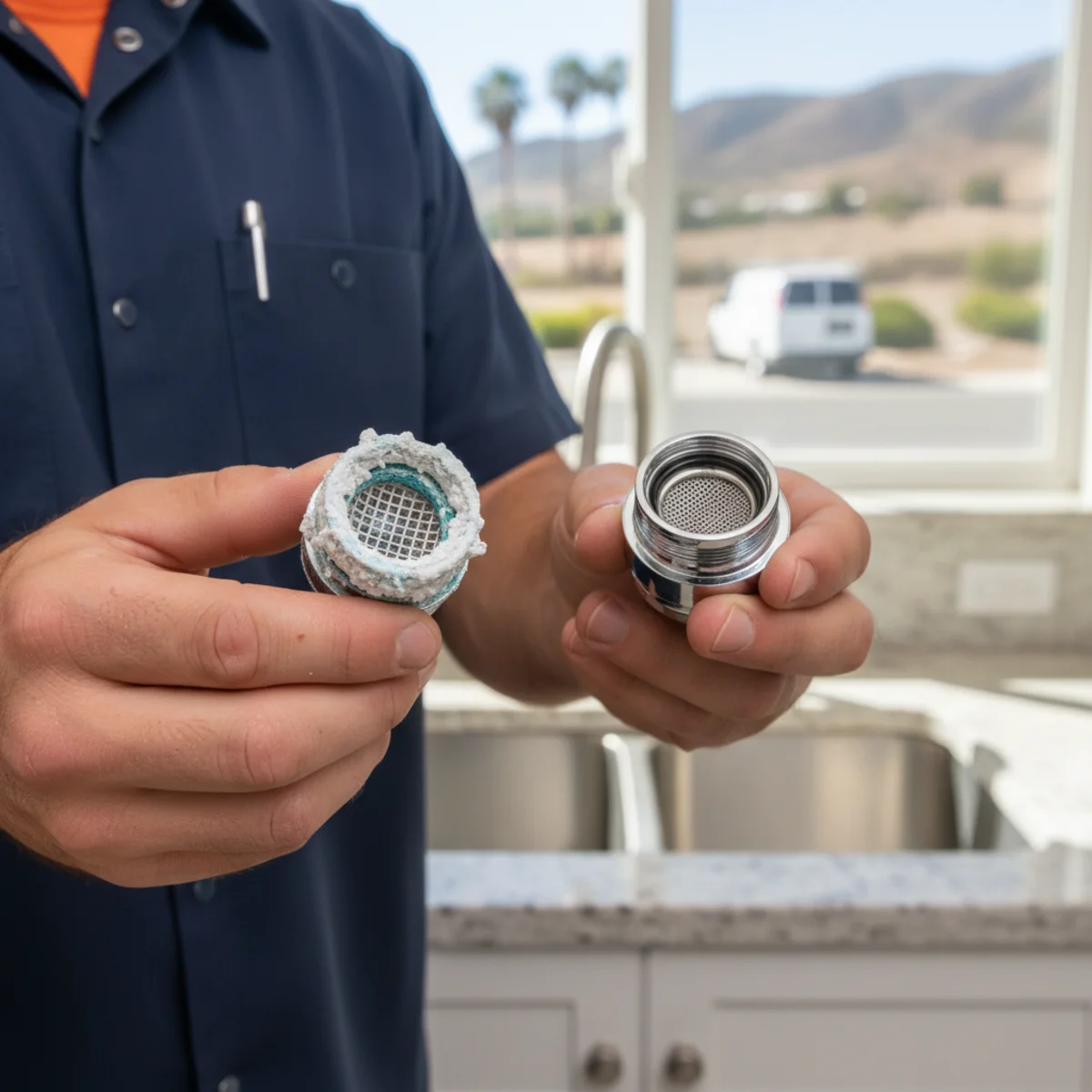
Inside pipes, particularly on the hot water side where water is regularly heated, scale accumulates on pipe walls over years. In supply pipes this narrows the effective flow area. In shower heads, faucet aerators, and other small-orifice components, scale clogs the tiny holes rapidly — sometimes within months in very hard water areas.
You've likely seen the effects already: white or yellowish crusty deposits around faucet bases and shower heads, reduced flow from a shower head you know hasn't been touched, and the chalky residue that forms wherever water droplets dry on surfaces. These are surface manifestations of the same process happening inside your pipes and fixtures. Removing scale from fixtures and shower heads with vinegar soaking is effective maintenance, but it doesn't address what's happening inside the pipes.
Damage to Appliances
Every appliance that heats water or has water in contact with heated surfaces is affected:
- Dishwashers accumulate scale on heating elements and spray arms, reducing cleaning efficiency and shortening element life
- Washing machines experience scale on water inlet valves and drum heaters
- Coffee makers and electric kettles scale rapidly and require frequent descaling to maintain function
- Tankless water heater heat exchangers — the critical and expensive core component — scale aggressively without annual descaling in Redlands' water
The cumulative effect on appliance replacement cost over the life of a home is substantial. A water softener isn't just a comfort upgrade in Redlands — it's a real investment protection measure.
Testing Your Water Hardness
Inexpensive water hardness test strips are available at hardware and aquarium stores and provide a quick reading in under a minute. If you're on Redlands municipal water, the city publishes annual water quality reports that include hardness data — your reading should be in the 250 to 350 ppm range.
If you have a private well or you're in an area served by a smaller water district, your hardness level may differ and is worth testing specifically. A comprehensive water test from a certified lab can also tell you about pH (acidity), chlorine, and other factors that influence pipe corrosion and water quality.
Practical Solutions
The most effective long-term solution for hard water in a Redlands home is a whole-house water softener installed at the point where the main water line enters the house. Ion-exchange softeners replace calcium and magnesium ions with sodium ions, producing soft water throughout the entire house. This virtually eliminates scale formation in pipes, water heaters, appliances, and fixtures.
The benefits of softening in Redlands include meaningfully extended water heater and appliance life, significantly improved soap lather and rinse (soft water requires far less soap and detergent), elimination of scale deposits on fixtures, and protection of newer pipe materials from the accelerated corrosion that hard water promotes.
In addition to softening, annual water heater flushing and anode rod replacement, regular aerator and shower head cleaning with vinegar, and prompt descaling of tankless units are practical maintenance steps. We install and service water softeners sized for Redlands water hardness levels — call (207) 419-2600 to discuss options for your home.
Need water softener installation in the Redlands area?
Protect your Redlands Heights home's plumbing and appliances from Inland Empire hard water with a water softener. Upfront pricing and fast local service.
Written & reviewed by the Redlands Heights Plumbing Pros team
Our licensed (CA C-36), local plumbers have handled the realities of Redlands-area homes for years — hard water, aging pipe, and slab leaks included. Questions about your home? Call (207) 419-2600 or request service.
Verify our CSLB license