Gas line leaks are rare but serious. Knowing how to recognize a leak and what to do — and not do — before help arrives can protect your family.
Key takeaways
- If you smell gas, leave the building immediately and call the gas company before calling a plumber.
- Only a licensed contractor should perform gas line repairs - DIY gas work is illegal in California.
- Even small gas leaks can accumulate to dangerous concentrations faster than most homeowners realize.
- After any seismic activity, have gas connections inspected - the Inland Empire is earthquake country.
Recognizing a Gas Leak
Natural gas is naturally odorless, but gas utilities add mercaptan — a sulfur compound — to give it the distinctive rotten-egg or sulfur smell that most people recognize. If you smell this odor near your stove, water heater, furnace, dryer, or anywhere along the gas line path through your home or yard, treat it as a potential gas leak until confirmed otherwise.
Other signs of a gas leak include a hissing or whistling sound near a gas appliance or line, dead or dying vegetation in a strip across an otherwise healthy yard (gas displaces oxygen in soil), or unexplained bubbling in a puddle or wet soil in the yard. In some cases a gas leak will cause physical symptoms if you've been in the space for a while: headache, dizziness, nausea, or lightheadedness. If anyone in the household is experiencing these symptoms without an obvious cause, take them seriously and get outside.
Immediate Steps if You Smell Gas
If you smell gas inside your home, act quickly and calmly:
- Don't use any switches, outlets, light switches, or phones inside the building — any electrical spark can ignite gas vapor
- Don't use matches, lighters, or open flames
- Leave the building immediately, leaving doors open as you go to ventilate
- Once outside, move well away from the building
- Call SoCalGas emergency line (1-800-427-2200) or 911 from outside or a neighbor's home
- Do not re-enter the building until the gas company or fire department has inspected and cleared it
For a minor smell near a specific appliance — like the faint sulfur smell when a gas burner ignites but doesn't quite catch immediately — confirm the burner lit and the smell dissipates quickly. A smell that persists or grows is a different situation requiring immediate evacuation.
What Not to Do
The actions that create ignition risk are counterintuitive because they seem harmless — but in a gas-filled environment even the smallest spark can be catastrophic:
- Don't flip any light switches on or off
- Don't use your garage door opener
- Don't use a landline phone inside the home
- Don't start or turn off any appliances
- Don't use elevators in a building
- Don't smoke or use any open flame
Also: don't try to find the leak yourself or repair it. Gas line repair requires licensed personnel with appropriate equipment. The gas company or a licensed plumber with gas line certification handles leak location, pressure testing, and repair.
Common Causes of Gas Line Problems
Most residential gas line issues fall into a few categories:
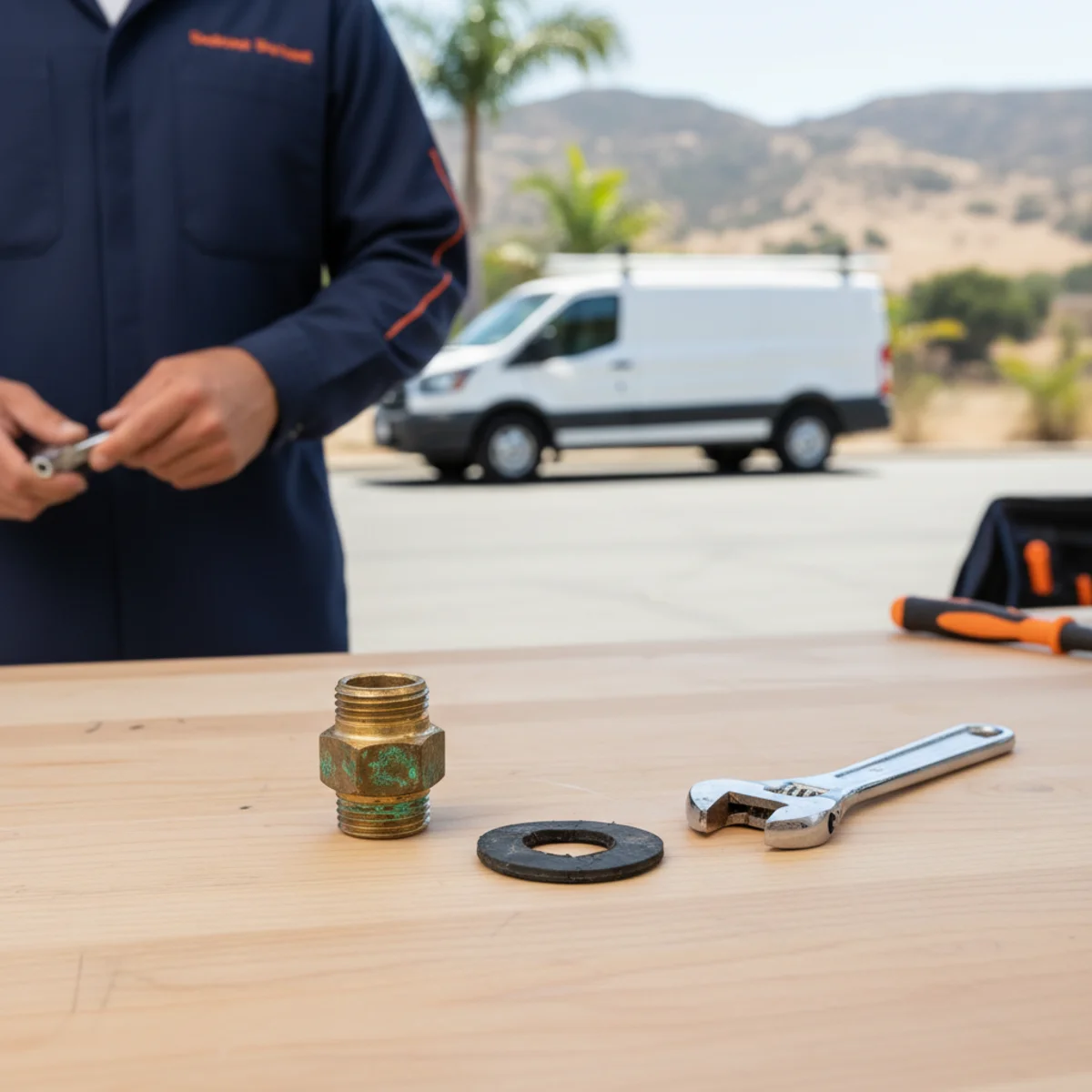
- Aging flex connectors: The flexible stainless steel connectors that connect appliances to rigid gas lines have a limited lifespan and can crack or develop pinholes. They should be replaced every 10 to 15 years or when showing any signs of corrosion.
- Corrosion on older black iron pipe: Older homes in Redlands may have exposed black iron gas piping that's subject to external corrosion, especially in garages or exterior runs.
- Damage during excavation: Digging in a yard without calling 811 first risks striking a buried gas line. Always call 811 before any digging project in Redlands — it's free and takes one business day.
- Improper appliance connection: Connecting a new appliance with an improperly sized or wrong-type fitting creates leak risk at the connection point.
- Seismic activity: Southern California earthquakes can stress gas line connections, particularly at flexible connector joints. After any felt earthquake, a quick smell-check around appliances is reasonable.
Who Should Repair a Gas Line
Gas line repair in California requires a licensed contractor. This is not a DIY category regardless of your general skill level. The materials, pressure testing requirements, and inspection process are regulated for good reason. Attempting to repair a gas line without proper licensing and equipment creates risk for your household and can void homeowner's insurance coverage.
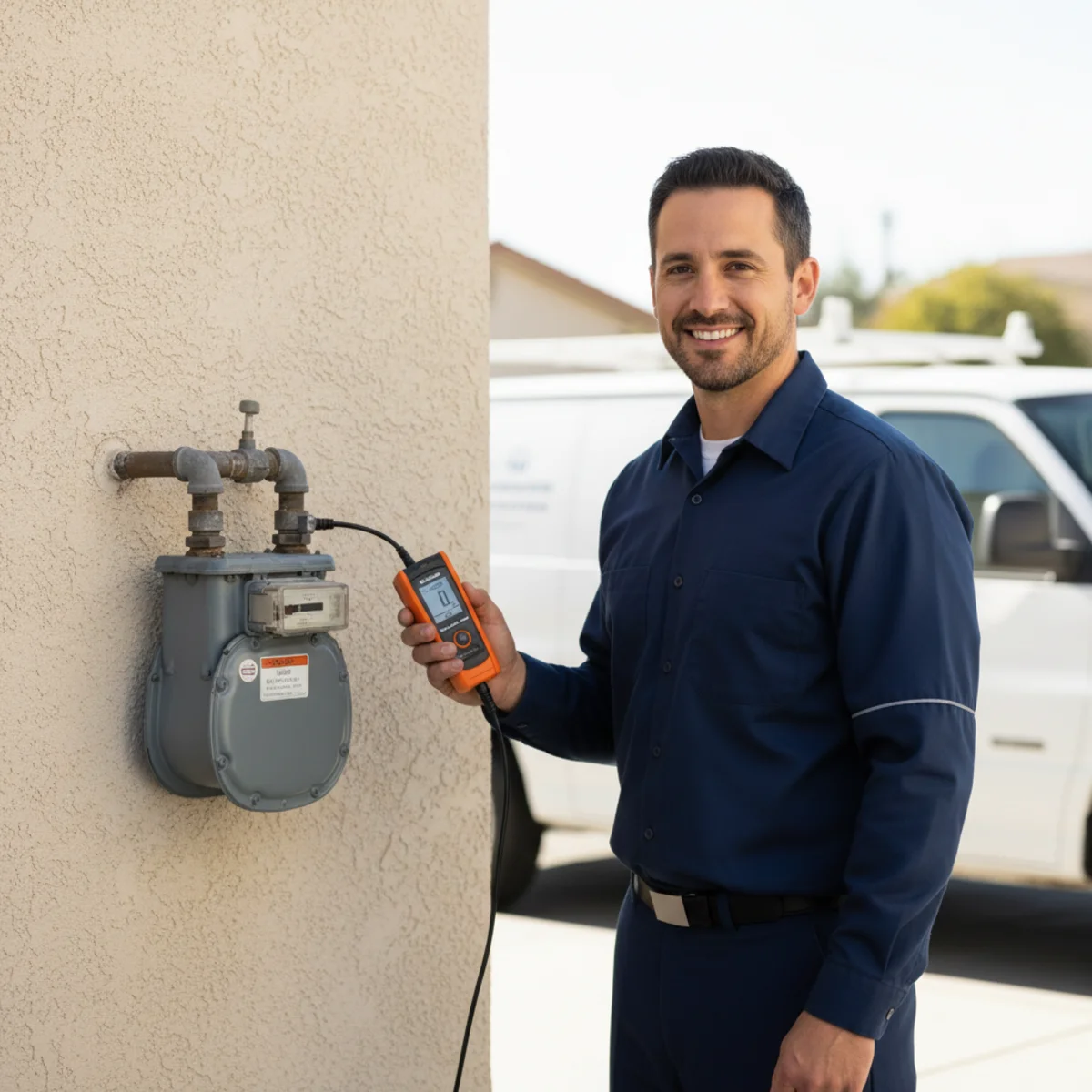
We are licensed and equipped to perform gas line repair, gas line installation for new appliances, gas leak detection, and gas line pressure testing throughout Redlands and the Inland Empire. If you're adding an outdoor grill connection, extending a line for a new range or dryer, or need to repair a section of damaged line, call (207) 419-2600 for a professional assessment.
Preventive Checks and Maintenance
Outside of emergencies, there are practical steps that reduce gas line risk in a Redlands home:
- Inspect flexible appliance connectors annually for any visible corrosion, kinks, or damage. Replace them if you see anything questionable — they're inexpensive.
- Have a gas pressure test performed if your home is over 30 years old and the gas lines have never been inspected.
- Ensure all gas appliances have their gas shut-off valves accessible and that you know where they are.
- Know where your home's main gas shut-off is — it's at the meter, on the street side of the regulator — and that you have the correct tool (a wrench) to operate it.
- After any significant earthquake, do a walk-through and check around appliances for any gas odor.
Peace of mind on gas safety is worth a professional inspection. We can check your gas system and give you an honest assessment of its condition.
Need gas line repair in the Redlands area?
Licensed gas line repair for Redlands Heights homes — leaks, damage, and corroded sections fixed safely. Upfront pricing and fast local service.
Written & reviewed by the Redlands Heights Plumbing Pros team
Our licensed (CA C-36), local plumbers have handled the realities of Redlands-area homes for years — hard water, aging pipe, and slab leaks included. Questions about your home? Call (207) 419-2600 or request service.
Verify our CSLB license