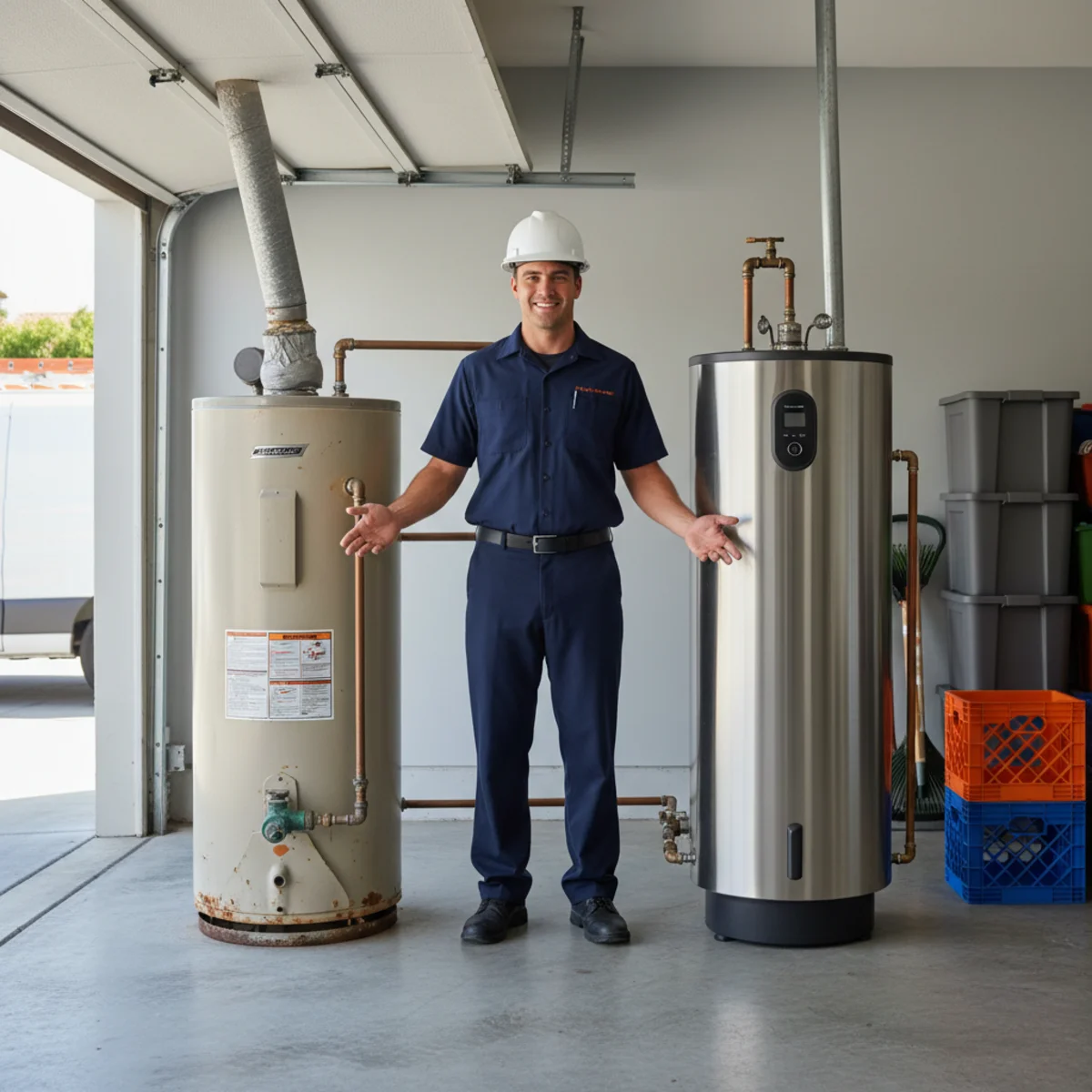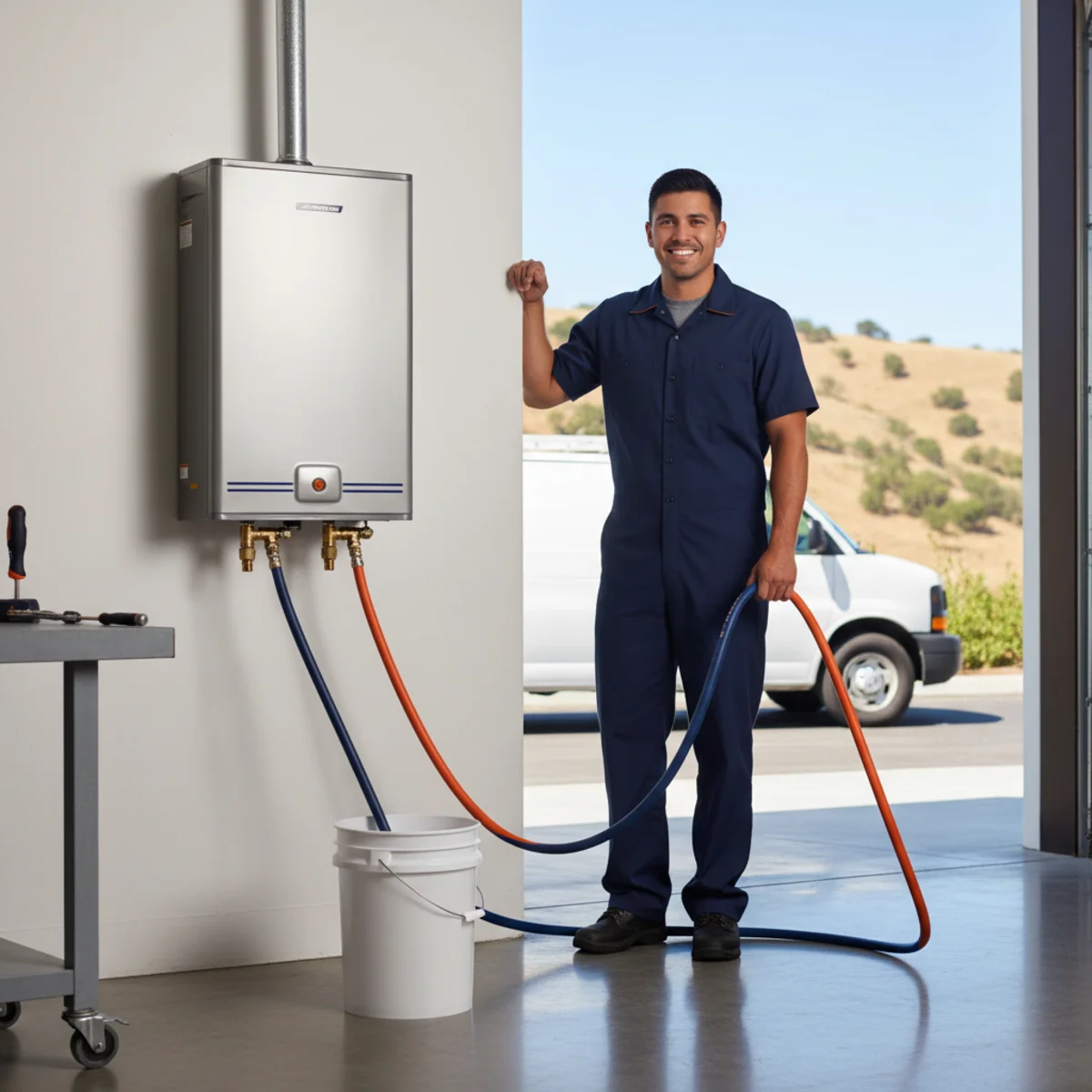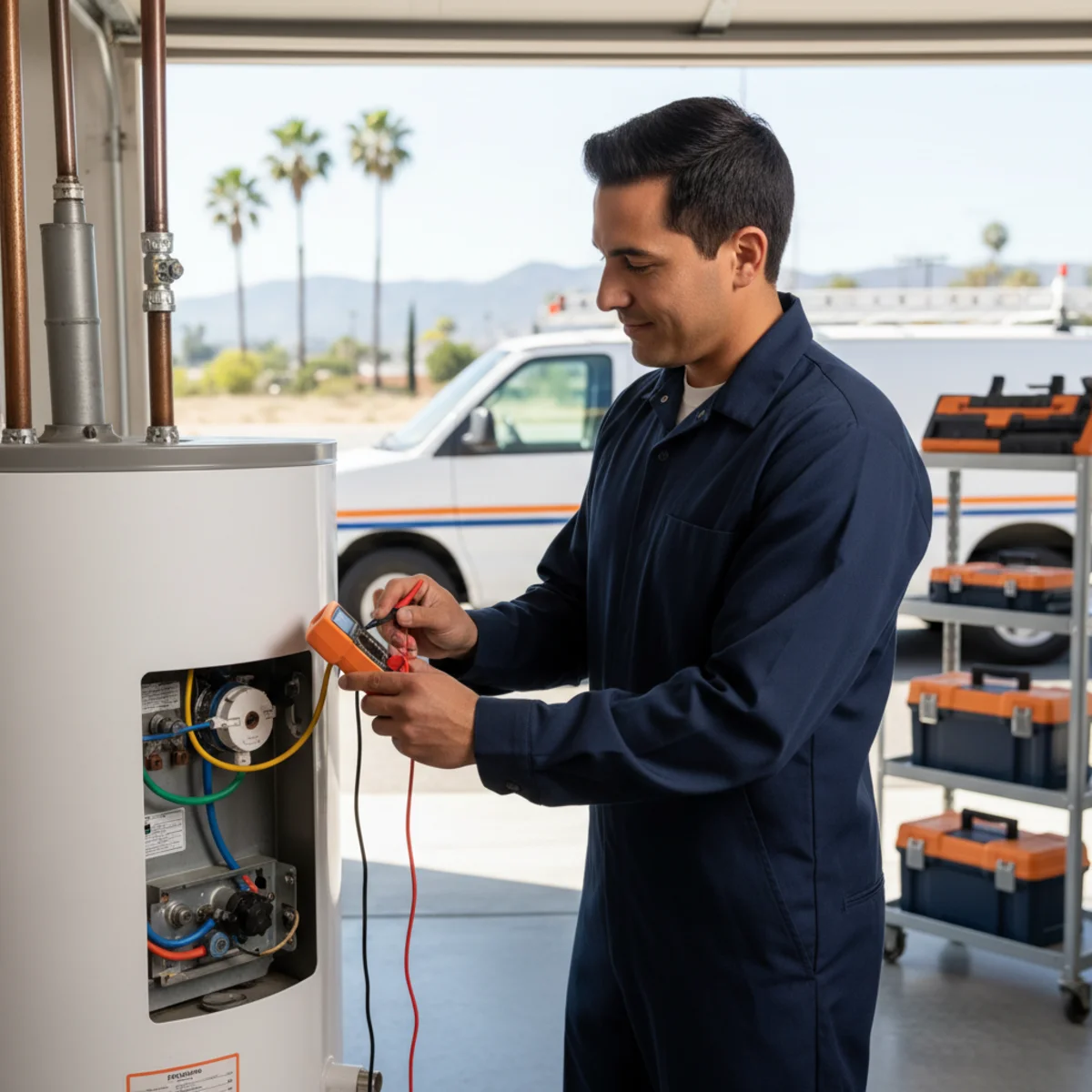
Before calling a plumber for no hot water, a few quick checks can identify if the fix is simple enough to handle yourself — or confirm when it's time to call.
Key takeaways
- For gas units, check that the pilot light is lit and the gas supply valve is fully open.
- For electric units, a tripped circuit breaker is the first thing to check before calling anyone.
- A faulty thermostat or a burned-out heating element is often repairable without full replacement.
- Sediment buildup at the tank bottom insulates water from the burner and causes uneven or slow heating.
Gas vs. Electric: Different Causes
Gas and electric water heaters fail in different ways, so the troubleshooting path depends on which type you have. Gas heaters use a burner controlled by a thermocouple and gas valve; electric heaters use one or two immersion heating elements controlled by thermostats. Tankless units — whether gas or electric — add a flow sensor, circuit board, and in the gas case an ignition system to the diagnostic picture.
The good news is that the most common "no hot water" problems for each type have straightforward checks that don't require any tools or technical expertise. Working through these before calling saves time and potentially a service call.
If you smell gas at any point during these checks — stop, leave the house, call the gas company. Gas troubleshooting stops immediately at a smell.
Gas Water Heater Checks
For a gas tank water heater that's not heating:
First, check the pilot light. Look through the viewing window at the base of the heater. The pilot flame should be visible — a small blue flame. If the pilot is out, the burner won't fire. Relighting a standing pilot follows a specific sequence on the control knob: turn to pilot, press and hold the igniter while holding the pilot button, maintain for 30 to 60 seconds after it lights, then release slowly. If it holds, turn to your temperature setting. If the pilot doesn't stay lit or won't light, the thermocouple — a small sensor that confirms the pilot is burning — is likely faulty and needs replacement.
Second, check whether the gas supply is on. Confirm other gas appliances in the house are working (stove, furnace). If the gas is off throughout the house, contact the gas company.
Third, check the thermostat setting on the control unit. If it was accidentally bumped to the lowest setting or "vacation" mode, increase it to 120°F and allow 30 to 45 minutes for the tank to reheat.
Fourth, check whether the unit has recently been reset. If the high-limit reset button (a red button on the control unit) has tripped, press it once firmly and see if the unit relights.
Electric Water Heater Checks
For an electric tank water heater that's not heating:
First, check the circuit breaker. Electric water heaters are typically on a dedicated 240-volt double-pole breaker. A tripped breaker looks like it's in a middle position between on and off. Turn it fully off and then fully on to reset it. If it trips again immediately or within a short time, there's an underlying electrical problem that needs professional diagnosis.
Second, if the breaker is fine, the heating element or the thermostat is likely failed. Most electric water heaters have two elements: an upper and a lower. The upper element heats the top of the tank; the lower maintains full-tank temperature. If only the lower element fails, you may have some hot water but it runs out very quickly. If the upper element fails, you may have little to no hot water.
Third, check the high-temperature cutoff. On the upper thermostat there's a reset button. Press it once and see if the unit begins heating. If it trips repeatedly, the thermostat is faulty.
Element and thermostat replacement is within reach for an electrically comfortable homeowner, but working inside an electric water heater's wiring compartment requires turning off the breaker and verifying there's no voltage before touching any wires. If you're not comfortable with electrical work, call us.
Tankless Water Heater Checks
Tankless water heaters have error code displays that communicate most problems. When the unit doesn't heat:
First, check the display for any error code. Note the code and look it up in your manual — most manufacturers' manuals are also available online by model number. Common codes relate to ignition failure, gas pressure, venting, or inlet water temperature.
Second, for gas tankless units, confirm the gas supply is on and that other gas appliances work. Check that the venting terminations on the exterior aren't blocked by debris, bird nests, or ice.
Third, try a power cycle: turn the unit off at its power switch or the breaker, wait 30 seconds, and power it back on. Transient sensor errors sometimes clear with a reset.
Fourth, check the inlet filter screen on the cold water inlet. A clogged filter restricts flow below the unit's minimum activation flow rate, and it simply won't fire.
If the error code returns after reset, or if you can't identify the cause from the display, it's time to call. Tankless internals — ignitors, circuit boards, heat exchangers — require professional diagnosis and repair.
Not Enough Hot Water vs. No Hot Water
The distinction matters. "No hot water at all" typically means the unit has completely failed to heat. "Hot water runs out quickly" may mean:
- The unit was heavily used and needs recovery time (normal — a 50-gallon gas heater typically recovers in 30 to 40 minutes)
- The lower heating element has failed in an electric unit (upper element handles the immediate demand; lower can't maintain full-tank heat)
- Severe sediment buildup has reduced the effective capacity of the tank
- The unit is simply undersized for your household's demand
In Redlands, heavy sediment from hard water is a very common cause of reduced effective capacity. A tank that used to deliver ample hot water and now runs out faster hasn't lost mechanical function — it's lost usable capacity to scale. Annual flushing prevents this; professional descaling can restore some capacity if sediment is not yet calcified.
When to Call for Service
Call us when:
- The pilot won't stay lit after relighting attempts — thermocouple or gas valve failure
- The circuit breaker trips repeatedly — electrical fault beyond the reset
- There's any water leaking from the unit — tank body leak means replacement
- The unit is over 10 years old and failing for the first time — worth discussing repair vs. replacement
- Error codes return after reset
- You smell gas at any point
For a household without hot water — especially with children, medical needs, or work demands — same-day service is available. Call (207) 419-2600 early in the day for the best chance of same-day response. We serve Redlands and the surrounding Inland Empire with water heater repair and replacement.
Need water heater repair in the Redlands area?
Diagnose and repair gas and electric water heaters fast in Redlands Heights. Upfront pricing and fast local service.
Written & reviewed by the Redlands Heights Plumbing Pros team
Our licensed (CA C-36), local plumbers have handled the realities of Redlands-area homes for years — hard water, aging pipe, and slab leaks included. Questions about your home? Call (207) 419-2600 or request service.
Verify our CSLB license